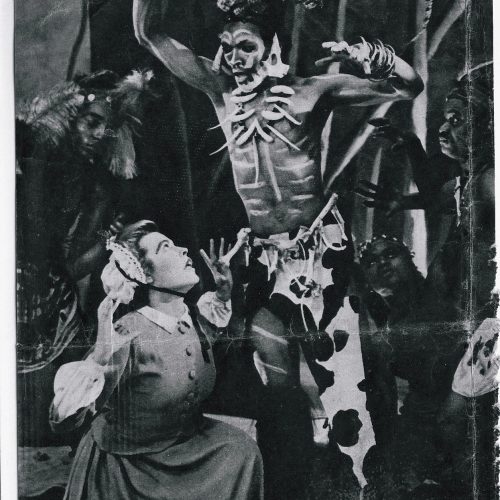
Reflections: Anna Pavlova
As part of Voices of British Ballet’s Reflections series Jane Pritchard, curator of Dance at the Victoria and Albert Museum, talks to Patricia Linton, founder and director of Voices of British Ballet, about the Russian ballerina Anna Pavlova and her influence on Frederick Ashton.
Reflections is a collection of personal responses to the topics and ideas that our archives highlight. These illuminating recordings sit alongside the Grace Notes section of our website. Grace Notes is a nod to the musical practice of embellishment, and also to British composer Arthur Bliss, who used the words to describe his “Grace Notes on Ballet” in Peter Noble’s 1949 book, British Ballet.
Dancers spend their careers engaging with the ideas of choreographers. Thus, having a colourful and enriched perspective on the world around them is essential. Ballet does not live in a bubble. These embellishments, both written on our website, and recorded in this special Reflections series, show the wider social and artistic context from which ballet springs and within which it thrives.
First published: June 30, 2026
Biography
Anna Pavlova is one of the few names in ballet whose fame was worldwide and enduring. Apart from her unrivalled quality as a dancer, in her later years she did more than any of her contemporaries to bring ballet to audiences all over the world, often to audiences with no previous experience of the artform.
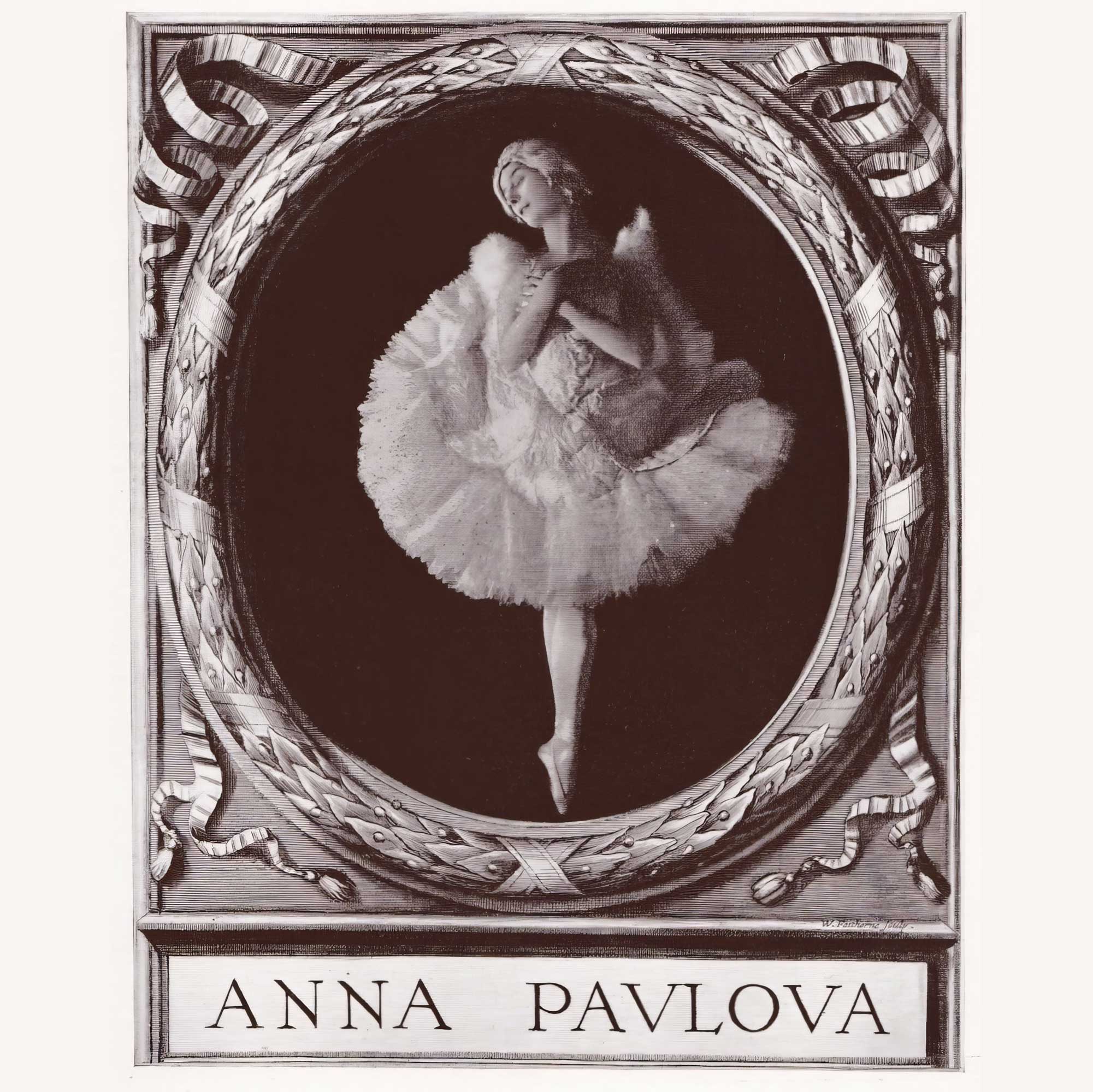
Born in St Petersburg in 1881, Pavlova entered the Imperial Ballet School in 1891 after being inspired by a performance of The Sleeping Beauty at the Maryinsky Theatre in 1890. Her teachers included Pavel Gerdt, Christian Johansson and, later, Enrico Cecchetti. In 1897 she first danced on the Maryinsky stage, and graduated in 1899 in False Dryads, a ballet arranged by Gerdt. She danced Giselle in 1903, Princess Aurora in 1908 and Nikiya (from Marius Petipa’s La Bayadère) in 1909. She was accorded ballerina status in 1906, the year when she also danced in Moscow and began a famous and long-lasting partnership with Mikhail Mordkin. In 1907, she created Armida in Mikhail Fokine’s Le Pavillon d’Armide, and in the same year he created on her Pavlova’s famous Dying Swan solo, with which she became indissolubly linked. In all she danced 18 major roles on the Maryinsky stage on which she also appeared with Vaslav Nijinksy in Les Sylphides.
Pavlova began touring abroad in 1908, partnered first by Adolph Bolm and then by Nicholas Legat. In 1909 she was Serge Diaghilev’s first ballerina for his Ballets Russes in Paris. She made her debuts in London and New York in 1910, and in 1912 she bought Ivy House in London, which became her permanent home.
The ballerina made her final Russian appearance in June 1914. She then formed her own company, consisting mainly of British dancers. She was sympathetic to the work of Fokine and had danced in several of Diaghilev’s early seasons, but after leaving Russia she preferred the autonomy of her own company, using her own repertoire and conforming to her tastes. For some this could seem mediocre and unexciting, but Pavlova had triumphant success all over the world, and she inspired many people with a love and enthusiasm for ballet, including notably the young Frederick Ashton, when she came to perform in Lima, Peru, where he was living as a schoolboy.
Anna Pavlova married Victor Dandré in 1914, who outlived her. She died in Holland in 1931.
Transcript
PATRICIA LINTON: Hello. This is Patricia Linton for Voices of British Ballet. I’m joined by Jane Pritchard, curator of Dance at the V&A [Victoria and Albert Museum]. Jane is going to reflect today on Sir Frederick Ashton’s admiration for the dancer, Anna Pavlova. It is well known that Sir Frederick Ashton adored Anna Pavlova; he had seen her dance when he was a boy. The very fact that it was where he lived at that time, in South America, gives a clue as to what this extraordinary woman was all about: a Russian ballerina, miles from home. Can you give us an idea, Jane, about both the pioneering and traditional Anna Pavlova, and why she captivated Ashton?
JANE PRITCHARD: I mean, yes, it is fascinating. I mean, Ashton said, “I never lose the vision of her,” and dancers would complain that he would say they couldn’t move like Pavlova. He was absolutely struck. Now, I think with Anna Pavlova, most people are aware that she became a very, very, well known ballerina. She danced The Dying Swan, but not a lot more.
I find her career fascinating. She does ten years at the Imperial Theatre [in St Petersburg], and sort of rises to the status of ballerina. She then starts touring in Europe and quickly decides that she wants to have her own company, not be part of somebody else’s company, and that she will actually take quality ballet to people wherever they might want to see and this is really Europe and America, and she eventually goes to Australia as well; she does South Africa. I mean, if any dancer conquers the world, she does. She does Asia, she does the… Apart from Antarctica, I think one can say she goes everywhere!
What is, I think, fascinating and very rarely understood is the fact that during the War years [1914 to 1918], she is in America for the entire time. 1914, in the autumn she goes to the United States. She does a number of tours in the States. She makes a film; she then acquires an opera company and tours with them; she then performs in variety at the Hippodrome in New York. And then obviously thinks, now what next? I’ll go to South America. So, she sets off for South America, and in South America she goes basically round the continent, anticlockwise, then she does a clockwise tour round the continent, and then she does another half tour before she comes back to Europe in 1920. So, she’s in the Americas for a very long time.
She actually goes to Lima [the capital of Peru], where Ashton sees her twice. Now this creates a problem – a problem that’s exacerbated by the fact that when Ashton has spoken, he has mentioned two ballets as being the first he saw. One of them is The Fairy Doll and the other is Raymonda. Now, he could have seen Fairy Doll in either of the seasons, and the seasons are actually in 1917, May to June. Raymonda he could have only seen in the 1918 season. So, one doesn’t really know quite what happened. Things he mentioned was the fact that he’d been taken to the theatre. There’s this whole business about going in a motor car, which was a new experience, and how everybody else was much more excited about the motor car than the performance, except for Ashton, who was absolutely struck by what he saw. He, sort of, describes that it was Fairy Doll and kept asking people, “Is that her? Is that her?” Because the [character of the] Fairy Doll isn’t there at the beginning and then the curtain opened, and Pavlova – in her pink tutu – descended, and Ashton’s comment was, “How ugly.” Then she moved, and he would forget the ugliness. I mean, she wasn’t the most traditional beauty, it must be said, Anna Pavlova.
In terms of Raymonda, he talks about the dancers with the flowers, which one can see. Pavlova’s Raymonda, which she only performed in America – it was never performed in Europe. Basically, it was the first two acts – but you never got Raymonda and Fairy Doll on the same programme. Anna Pavlova’s programmes work in the fact that you either had two one-act ballets and a divertissement or one two-act ballet and a divertissement; therefore, with Raymonda you were only going to have a divertissement to go with it. So, it’s not quite neat and tidy. No, there are no performances which actually match up. That one… If Raymonda is the case, then we can actually say it’s either the 8th or the 21st of October 1918, is his first performance. As I say, Fairy Doll could have been either, but it does suggest that he actually went more than once, and maybe things have elided. And I think the sort of sense of him, and he talks about his friend that he went with, Guy, after the performance, Ashton sort of raving about wanting to be Pavlova, whereas sort of, Guy was pretending he would be, sort of, Jean de Brienne, and be a knight, as children do after performances. So, there is this sort of confusion; it’s not cut and dried. And you sort of think, oh… Most people write, oh, she went to Lima, he saw her then, but they haven’t twigged the fact that it’s not quite as easy to work out when that was.
Interestingly, Julie Kavanagh puts this incident basically at the start of her biography of Ashton, to emphasise its importance. And, certainly, Ashton really, he’s sort of saying, you know, that Pavlova was the greatest theatrical genius he had ever seen and, very famously, he sort of says, you know, “She injected me with the poison”, and I think that is absolutely a very good impression…
PATRICIA LINTON: When was this?
JANE PRITCHARD: He saw Pavlova, he wanted to be Pavlova and that starts his career.
PATRICIA LINTON: …and was it a physical thing? It’s something beautiful in the physique. Was it something musical? Was it something she did with the music? Was it something… a daringness? What was it?
JANE PRITCHARD: Well, I think the things that he really, sort of, talked about and saying how… Her wonderful hands, her wonderful feet, her wonderful legs. It was certainly her physical appearance, and how she moved, absolutely encapsulated him. Now, a lot of people now will say, “Oh, well, she didn’t have much of a technique”. But I think she did have qualities: she understood how to perform and sometimes performance is not the same as a technical display. She obviously had the ability to take on a whole range of different characters. She does dramatic roles: I mean, she’s Giselle. She does much more, sort of, light-hearted, sort of soubrette roles. She’s Lise in [La] Fille mal gardée, which I think you must take that extreme, you know, and then she’s obviously Kitri in her production of Don Quixote. She could do everything. And she brought the qualities of movement that she had. I think her beautiful feet were part of it…
PATRICIA LINTON: Yes. And beautiful legs actually…
JANE PRITCHARD: Yes.
PATRICIA LINTON: The line of the leg; line…
JANE PRITCHARD: Yes
PATRICIA LINTON: Beautiful line.
JANE PRITCHARD: I do think you’re right that line was important, and line often is not focused on so much now. So, I think, those sorts of things. But how she moved. She had speed when she needed it, and she could do things in a much more adagio way, if necessary.
PATRICIA LINTON: What’s quite interesting to me is that she was brought up in a quite traditional way in the [Imperial Ballet] school and went into the Mariinsky company. She loved [Enrico] Cecchetti’s classes, so we gather, so she was on a sort of set trajectory really; no hint of this amazing woman to come. Then she went, just for one season, I believe, with Diaghilev [Serge Diaghilev’s Ballets Russes]. So, again, she was following the usual route for these sorts of dancers. Umm, [she] came up against [composer Igor] Stravinsky, rejected Stravinksy, even though he… I gather he tried to help her at the piano and explain music to her. She made her decision. She wanted to do it differently. But she… again, like her legs and feet, [laughs] she was so fine, umm, that she was feisty beyond belief, but with such elegance. [Laughs]
JANE PRITCHARD: I think feisty is a good word, actually, for her; it’s not one that’s often used. But I’d like to give you some corrections there. Number one is that she was already touring in Europe before Diaghilev. We put so much emphasis on Diaghilev and the Ballets Russes, that we forget that there are other activities.
So, in 1908/1909, she is on a tour organised by a Finnish impresario, Edvard Fazer, and that takes productions mainly to Baltic companies and to Germany and is hugely successful. That includes… There’s a wonderful account that she has of after her performance in Stockholm, how it’s… really old days when the men, sort of, unhitched the carriage and pulled her from the theatre to her hotel. Now, actually, it’s hardly any distance between the hotel and the theatre, but never mind, and then, you know, her discovering that the audiences loved her outside Russia. And I think her success on those two tours was enormously important, and that is why she arrives late in 1909 for Diaghilev’s season, [his] Russian Season in Paris; umm, not there for the very beginning. So, she’s already making her way.
That year, she also goes to London, and she looks around what is seen for dance in London, and she realises that it’s not the same as everywhere. It’s not like the Opera House regularly presents ballet: they very, very rarely have any ballet anywhere except in operas. And so, she realises that dance in Britain takes place in the music hall, and she gets her engagement with that. She then is basically booked in England for the same period that Diaghilev decides to have his season, so there’s no way she’s available to do Firebird. Now, I’m not saying that she would have chosen to do it, but it doesn’t seem that the story quite adds up.
Interestingly, of course, [Tamara] Karsavina was also in London, err, 1910, and then actually she gets leave from the [London] Coliseum to go back and perform Firebird, err, the premiere, so it probably could have been wangled someway, but I don’t think that was in Pavlova’s interest. She knew she wanted to control her career, I think, and she found out the way to do it. And that is also, I think, very interesting because the early part of her work in Britain she is performing at the Palace Theatre in London. When she goes on tour, she’s doing full evenings in regional theatres, so she’s actually going out, taking ballet to British audiences for full evenings when nobody else was doing it. She really is pioneering and so much of this has been forgotten. I just think people should take Anna Pavlova much more seriously.
PATRICIA LINTON: Yes, we’ve been economical with the facts, haven’t we?
JANE PRITCHARD: Yes. And the other thing is, I mean, I know I have recently read somebody, sort of, saying, oh, and then she was promoted to the Opera House in the ‘Twenties [1920s]. She is organising her own performances. She books the Opera House for seasons in the ‘Twenties, and she does four seasons there, and they are in September, which is a pretty dead time for opera houses, but they’re very useful to her, ‘cause they set up her new tours. And, of course, Ashton would have seen those seasons in London, so that would have given him a chance to see her quite a bit. We can’t read back current practice into what happens in the past; we need to understand the procedures and how it fits into a bigger picture.
PATRICIA LINTON: One small thing that comes out of that is how quickly she managed to organise tours and get going from just being one act in something and then touring with a full evening of ballet. You couldn’t do that now; you couldn’t get it together that quickly. And how did they travel?
JANE PRITCHARD: Umm, she goes to the Palace [Theatre], which was one of the places that was presenting dance on a regular basis, and once she is quite successful there, she is also able to do matinée performances once a week, which will focus on ballet. There will be a few musical interludes as well, because it’s the largely divertissement programme, so she’s gradually building up a programme. The first regional tour she does [in the UK], actually there’s a little playlet that goes along as well, but that soon gets dropped, the audiences didn’t need that, and… and then… So, I think it’s partly the theatre management, which was used to touring things around, very quickly saw the potential but, yes, so it was extraordinary and then gradually she adds one-act ballets, and then she’s in a position really to go and tour further.
PATRICIA LINTON: And does she have tour managers, you know, for landladies to…? Or did they stay in hotels and…? And what happened with the costumes? I mean the organisation…
JANE PRITCHARD: I don’t think we know fully the organisation, but, yes, I’m sure there’s a touring wardrobe. I mean not for… necessarily for the first tour, but then [the costumier] Madame Manya comes along and controls that side of things. She also makes Pavlova’s costumes for her: a very, very significant woman, I think, in the development of costumes for dance. And, yes, she soon has [Victor] Dandré [who later married Pavlova] to help on the administrative side and organising things. As for how they travelled, well, there were trains, and the trains seemed to run! So, trains and then obviously having to have carts to get the things from the station to the theatre. With a divertissement programme, you probably don’t need a lot of scenery, but really, I think scenery comes in significantly from about 1912, so very quickly. And she’s using designers; it’s not second-rate stuff.
PATRICIA LINTON: Could you talk a little bit more about her costume maker, Madame…
JANE PRITCHARD: Madame Manya?
PATRICIA LINTON: Hmm.
JANE PRITCHARD: She, sort of, basically was a costumier, worked in a costume workshop in St Petersburg, and was, I think, loaned to Pavlova and they obviously got on, and so she actually becomes the person who makes Pavlova’s costumes. And she is, I think, very important, because the way she made a tutu becomes what… becomes called an “English” tutu. She also goes on after Pavlova to Alicia Markova, and Markova takes her tutus to the Vic-Wells [Ballet] wardrobe and that becomes the template for the Vic-Wells [Ballet’s tutus]. So, apart from anything else, I think she is an enormously influential woman.
PATRICIA LINTON: Do you have any sort of technical detail about what made it, in the end, an English tutu? How did it differ from…
JANE PRITCHARD: I think it’s to do with the shaping of it, but it becomes known, in the costume world, as the “English” tutu.
PATRICIA LINTON: …and how the frills are sewn on?
JANE PRITCHARD: It’s the tutus that have the fitted bodices, but it doesn’t… It’s partly to do, I think, with the developing figure of the dancer. It doesn’t go sort of quite straight down, so you will have the point [at the base of the bodice] and then you’ll have the extra pieces round the hips, so is more shapely for the body, if you like…
PATRICIA LINTON: Mmm…
JANE PRITCHARD: …whereas now people are thinner. I know Pavlova was somebody who was very slim and really, sort of, becomes a model for that sort of thing, but she… It is the case that we can sort of see there is a style, and then things evolve from there. So, I will always argue that Madame Manya and Karinska [another Russian-born costumier who worked principally in the United States] are the two people who really lead the way for making tutus.
PATRICIA LINTON: It’s so interesting that we’re talking about women all the time [laughs] and their imprint has been extraordinary in the ballet world.
JANE PRITCHARD: Yes.
PATRICIA LINTON: I mean, you’ve still got great male teachers, but the women they taught have taken the art forward and developed it: extraordinary. [Laughs]
JANE PRITCHARD: I think also one of the things I would say about Pavlova, it’s worth remembering… I mean, Ashton always sort of said how wonderfully she, sort of, moved even when she was just walking and, even if it was not a very good performance, when she did her curtain calls, they were an art in themselves. So, even if it hadn’t been the definitive performance, you thought you’d seen the definitive performance because of the way she did it. And I often think the way that Ashton, sort of… almost, sort of, hung onto the curtain [for his own curtain calls] …
PATRICIA LINTON: Mmm…
JANE PRITCHARD: …may have had the same sort…
PATRICIA LINTON: Mmm
JANE PRITCHARD: …of idea. I mean, he’s quite good at taking curtain calls…
PATRICIA LINTON: Mmm, very much so.
JANE PRITCHARD: So, I think right from the start he moved, that was part of it, and he also said, you know, even when she left the stage door, she was doing a performance. He had a lovely description about the, umm… the taxi, or whatever. The car would arrive and bouquets would be taken out and put in the car, and then Pavlova – immaculately… probably in white, because it contrasted with her hair – would, sort of, come out and almost give her blessing to the… holding one bunch of flowers, which she would then distribute flowers around for [the] people waiting, and then get into the car. And there would be a light on in the car, so you could see her as she drove off. So, Pavlova actually really, you know, sort of developed the art of being a star, being a celebrity as part of her work.
PATRICIA LINTON: We’re back to glamour again.
JANE PRITCHARD: We are.
PATRICIA LINTON: [Laughs] And that went on, actually, didn’t it, with [Margot] Fonteyn, in fact? Fonteyn and the stage door became a really important thing and now it’s gone. I suppose it’s perhaps to do with social media or whatever; I don’t know.
JANE PRITCHARD: I think also it’s probably to do with security.
PATRICIA LINTON: Oh, possibly.
JANE PRITCHARD: You know, when you, sort of, think about things. But, yes, and I’m sure that, you know, sort of Ashton would be somebody who would say, “No, if you’re leaving, if you’re the star, you be the star”.
PATRICIA LINTON: Absolutely.
JANE PRITCHARD: I mean, it’s lovely to think, you know, there he was, a young lad in Britain, and he was making that wonderful screen with all the cutouts of pictures of Pavlova on it, and things like that; he really was very, very struck with her. And obviously he could see her for that decade, that he… first decade that he was in Britain.
PATRICIA LINTON: At a very formative time for him...
JANE PRITCHARD: Yeah, absolutely.
PATRICIA LINTON: …Yes, yeah.
JANE PRITCHARD: So, yes, that first performance was crucial, but it continues through.
PATRICIA LINTON: Yes.
JANE PRITCHARD: We don’t know all the performances he saw and things like that: there was no sort of pattern of it.
PATRICIA LINTON: So, it wasn’t a one-minute wonder. It was really something that penetrated his imagination over a decade or so, you know?
JANE PRITCHARD: It’s also quite interesting, sort of, to remember he auditioned in 1925 for Pavlova’s company and he describes… So, this was in the autumn, so during the Covent Garden season, must have September. Earlier that year, in April, he’d actually danced on Brighton Pier – very important going round the piers and things like that. But the programme, some sort of cabaret-type programme, he was dancing with Molly Lake and Elsa Darcy, who had been Pavlova dancers, and so I suspect that there was a sort of sense of, “Ooh, you know, well, why not go and try?” And he describes how he watched a rehearsal of Giselle and then he was auditioned by [Mieczyslaw] Pianowski, who was her Ballet Master at the time, and [was] turned down. I think it was probably to his advantage. I don’t think he would have benefitted from Pavlova’s company, and I think he might have been somehow a bit disillusioned, so…
PATRICIA LINTON: And best it turned out the way it did.
JANE PRITCHARD: I’m sure he was, you know, upset at the time.
PATRICIA LINTON: Mmm.
JANE PRITCHARD: And then, very much at the end of Pavlova’s career, she had actually seen his Leda and the Swan and Capriol Suite and, in fact, Ashton saw her last performance, or the matinée of the last day of performances at Golders Green, in 1930. And it had been arranged that when she came back and did another tour, that she would consider taking him into the company partly so he could choreograph something, umm.
PATRICIA LINTON: Is there any record of what she said when she’d seen Capriol Suite?
JANE PRITCHARD: I don’t think there’s an account of, “I like this, or I like that”, no…
PATRICIA LINTON: No.
JANE PRITCHARD: Things that we would love to have been a fly on the wall for! No, I don’t think we’ve got that information, but, you know, she obviously thought that there was some talent there, and it appears to have been a toss-up between Ashton and Paul Haakon, and he had a better divertissement programme lined up, so he was the one who was taken and would add more contrast to the programme. So, Ashton seemed to have just missed out.
PATRICIA LINTON: So, do you think this huge admiration he had… beguiled by her, really, wasn’t he? Do you think this affected his choreography in any way, or not?
JANE PRITCHARD: Well, yes. I mean there’s endless quotations and endless trying to make dancers look like Anna Pavlova. I mean most famously, of course, there’s the “Fred step”, and usually it is said that [the “Fred step”] was first performed in Les Masques, but Alicia Markova revealed that it was actually first performed in [John Dryden’s comedy] Marriage a la Mode, so actually in Pavlova’s lifetime but, of course, Les Masques was filmed, so we’ve got evidence of it there. So that’s, I think, why we’ve tended to latch on to that, but it was fascinating when Markova actually revealed that.
So, Diaghilev’s company had folded, Markova was at a loose end. [Marie] Rambert, for whom Ashton was working, was actually linked very closely to the Lyric Theatre, Hammersmith. They were putting on this relatively little performed production of Marriage a la Mode and wanted a ballet in it, and Ashton was invited to choreograph it, and so he asked Alicia Markova if she would come and be his ballerina. And, apparently, when he was working on the pas de deux, he said, “Well, let’s do that thing that Pavlova does in her Gavotte.” And so, that’s where it comes from. Interestingly, when I’ve seen reconstructions of the Gavotte, there’s no sign of the combination that is the Pavlova step.
PATRICIA LINTON: Well, in a way, this Pavlova step is the calling card for both Pavlova and Ashton, because it’s always called that when ballets are revived, and so dancers of today hear those names repeatedly, so it has kept them alive in lots of ways.
JANE PRITCHARD: It’s probably made people more aware, that Pavlova does have an influence.
PATRICIA LINTON: Yes
JANE PRITCHARD: But, with Ashton, I mean, it’s… sometimes, it’s just little details. I don’t think he’s necessarily quoting, but some of those wonderful, sort of, pas de bourrées and things like that, that’s very much sort of thing, but Pavlova did. So, Ashton quite often does deliberately, sort of, quote from Pavlova so there’s certain steps from Night that he saw, and he did say… Umm, I can remember at a screening of Pavlova films, he did say, “That is how I remember her: that piece of film is how I remember her.” So, obviously that meant a great deal to him.
In fact, he was very interesting on the films, and he pointed out how some of those solos that Pavlova does, of course they don’t work, you haven’t got the lighting and, of course, the music’s had to be added, so you’ve only started with part of the performance anyway. Particularly I remember him talking about the Californian Poppy solo, when Pavlova, actually, at the end, sort of picks up, the petals of her costume… coat – a very curious costume – but if you’ve got the right lighting to go with it, and the right music, it really would work.
PATRICIA LINTON: I mean, Ashton is quite famous as saying in one of his interviews that you have to have an idiom, you have to be recognisable. I wonder if, somehow, Pavlova is woven into that notion for him, his, umm… Well that she was sort of resolutely bound to his memory in a way…
JANE PRITCHARD: I mean, he obviously… I mean the image of Pavlova must have fitted in with most of the things he saw, because her range was so wide.
PATRICIA LINTON: I think… Yes, that’s interesting. I think that’s something because, as you say, people remember her for The Dying Swan, they don’t realise this huge range.
JANE PRITCHARD: Yes, and I think, you know, I mean she really has been pigeon-holed into one dance. I mean, if people… If you say Pavlova, people instantly say Dying Swan; she didn’t perform it as often as people must… They think she did it every performance; no, she didn’t. The other work that they tend to remember, actually, is Fairy Doll, but I have a sort of theory that if you’re young and seeing Pavlova, Fairy Doll would… was something you would relate to, and most of the people who’ve been around more recently, perhaps not now, were probably quite young when they saw Pavlova, so there’s that element that comes in as well, I think.
But, I mean, Ashton does take some of the scores that were actually used by Pavlova and does his own versions of them. So, things like La Péri that he does two versions of, the way he uses his groupings in Marguerite and Armand as echoes of Christmas. The way that the suitors for the young girl work… It’ll be just a little reference. And I look at something like the Thaïs pas de deux, and the way [Antoinette] Sibley comes on, and with that shawl and everything, and I think Pavlova… It may not be Sibley, but whoever it is, I think Pavlova, erm, so I think that, you know, that it does go through.
There’s also something I’ve never learnt very much about, and I would like to know more about. Apparently, in 1939, he created a solo for Muriel Stuart, and David Vaughan says he really created the solo. He had a chance to talk to Stuart, who was one of Pavlova’s leading dancers, more about Pavlova. So, I think that that thing came through. It was not only putting it on stage, but also remembering… and he was somebody who, I think, helped to keep Pavlova’s memory alive.
PATRICIA LINTON: Absolutely. Imbued in his work. That was lovely. Thank you so much, Jane.
You may also like...
Lynn Seymour
Irina Baronova