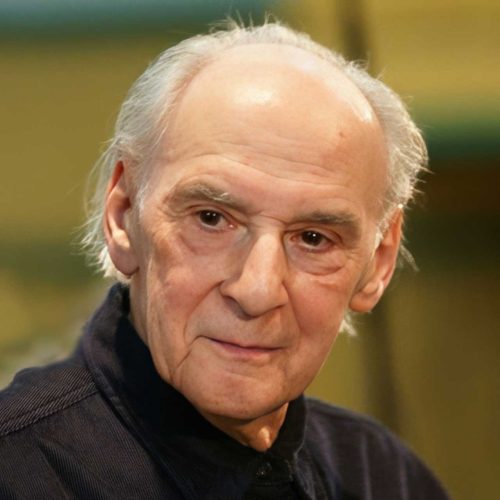
Irina Baronova
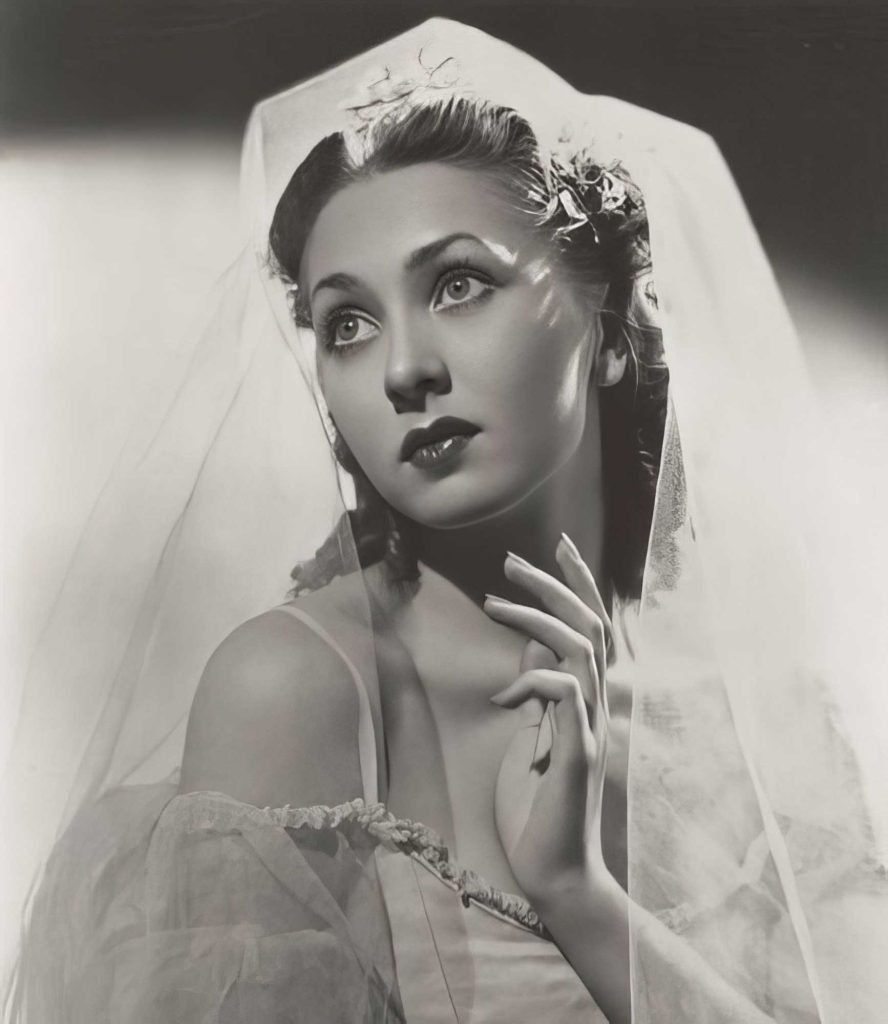
What agony to hear this gorgeous, beguiling woman lament the lack of interest she feels was shown to her generation in passing on their knowledge and experience to the next. Irina Baronova’s no nonsense approach is mysteriously interwoven with intuitive artistry – we could expect no less from one of the original “Baby Ballerinas” of the Ballet Russe de Monte Carlo. In this interview, recorded in 2006, Irina Baronova is interviewed by Patricia Linton, founder and director of Voices of British Ballet. The interview is introduced by Jane Pritchard of the V&A.
First published: March 17, 2026
Biography
Irina Baronova was a Russian-born ballerina and actress, known as one of the “Baby ballerinas” of the Ballet Russe de Monte Carlo. She was born in Petrograd in 1919. Her father, Mikhail Baronov, was a lieutenant in the Imperial Navy, and in 1920 he and his family had to flee the country following the Russian Revolution. They crossed the border into Romania disguised as peasants and eventually settled in Bucharest. They had no money in a foreign country where they did not know or speak the language. Baronov eventually found a job at a factory, and the family spent the following years living in the city slums.
At the age of seven, Baronova began taking her first ballet classes when her mother (who was a ballet enthusiast) found her a teacher, Madame Majaiska, a former corps de ballet member of the Imperial Russian Ballet. She was also a refugee from Russia and so conducted Baronova’s classes in the kitchen of her one-bedroom house, using the kitchen table as a barre. To provide Irina with professional training, the family moved to Paris when she was ten years old, where she was taught by Olga Preobrajenska and Mathilde Kschessinska. In 1930, at the age of 11, Baronova made her debut at the Paris Opéra. The catalyst for her career came in 1932, just before her 13th birthday, when George Balanchine engaged her for the Ballet Russe de Monte Carlo, along with the equally youthful Tamara Toumanova and Tatiana Riabouchinska. The English critic Arnold Haskell dubbed this illustrious trio the “Baby Ballerinas”.
Baronova was 14 when she was given her first principal role, as Odette in Act II of Swan Lake, in which she was partnered by Anton Dolin. At the age of 17, she eloped with an older Russian man, German (Jerry) Sevastianov, in order to get married. Their marriage came two years later, in 1938, with a ceremony in Sydney, Australia. Baronova then joined Ballet Theatre (now American Ballet Theatre) in the United States of America, subsequently divorcing Sevastianov. In 1946, in the United Kingdon, she met the theatrical agent Cecil Tennant who asked her to marry him, which she did, retiring from her career in ballet at the age of 27.
Between 1940 and 1951, Baronova appeared in several films, including Ealing Studio’s Train of Events (1949). Much later she worked as ballet mistress on the 1980 Hollywood film Nijinsky. During her marriage to Tennant, she gave birth to three children: Victoria, Irina and Robert. In 1967, Tennant was killed in a car accident, and Baronova subsequently moved to Switzerland. She then resumed her marriage with her first husband, Sevastianov, who died in 1974. Baronova then began teaching master classes in the UK and the USA. In 1986 she staged Mikhail Fokine’s Les Sylphides for The Australian Ballet, and in 1992 returned to Russia to help the Maryinsky Theatre with an archival project. In 1996 she received a Vaslav Nijinsky Medal in Poland and an honorary doctorate from the North Carolina School of the Arts. In 2000, she went to live in Australia with her daughter, Irina. In 2005 she appeared in a documentary on the Ballet Russe, and published her autobiography Irina: Ballet, Life and Love. She died in her sleep in Byron Bay, Australia, on June 28, 2008, at the age of 89.
Transcript
in conversation with Patricia Linton
PATRICIA LINTON: I’m feeling so humbled sitting here, knowing that you spent all those years with [Mikhail] Fokine. It just… it’s, God, extraordinary!
IRINA BARONOVA: Ah, God, we were lucky.
PATRICIA LINTON: Yes.
IRINA BARONOVA: We were lucky, my generation, that we had those people to work with. Very, very lucky.
PATRICIA LINTON: So, what goes to making a good director?
IRINA BARONOVA: Culture. Wherever we went, [Léonide] Massine himself, sometimes Fokine, would take the whole company to different museums and explain what we should look at and remember, and observe, and maybe apply to ourselves in certain works. So, it wasn’t only about ballet that we were instructed, but about other arts. It’s very important, because you can apply everything. You’re like a sponge.
PATRICIA LINTON: Fokine’s ballets were all very familiar with the ones from the Diaghilev period, especially Les Sylphides.
IRINA BARONOVA: Yes, and Petrushka, and The Firebird and Scheherazade.
PATRICIA LINTON: Exactly, but what about his later ballets? Bluebeard, Cinderella, and the ones that he created for you? Why haven’t they remained in the rep[ertoire] do you think?
IRINA BARONOVA: I really don’t know why they didn’t keep them, because they were lovely ballets, and fun, and great success. Why Ballet Theatre didn’t keep Bluebeard, why nobody tried to do Cinderella again. Is it because people who could pass that on, and were still alive and kicking, were never asked? And those that couldn’t restore because they didn’t know it, didn’t want to ask us to help doing it. I really don’t know, and I’m… I’m amazed, especially with Bluebeard. That was such a huge success everywhere. And you know, with Fokine, what is still performed is because it’s box office. You know, and, and when you, you look at Sylphides, if it’s done properly…
PATRICIA LINTON: What are the biggest mistakes people make with [Les] Sylphides?
IRINA BARONOVA: In Sylphides, what was a piece that was atmosphere, whispers and talks, you can see it in the choreography. It’s not poses. No. It was a talk with those spirits that inspired the poet. He’s there, you know, thinking about his poetry in the middle of the forest, and those are the creatures that he hears and maybe doesn’t see, but who give him ideas, and they whisper to each other, you know. It’s so clear in the prelude.
PATRICIA LINTON: I wish we were filming now, because you’re dancing and moving that so beautifully… Mmm.
IRINA BARONOVA: The whole thing is I hear that my other Sylphide saying something to me, and I go to her and I respond. Then I hear somebody there, that’s why I turn and go there and respond. Then somebody at the back. So, you go “Y-om-pom-pom,” and then relax “dum dum” and the whole thing is talking, whispering, responding. Whispering, responding. And I had such fun, er…
While Maina Gielgud was in charge here [at The Australian Ballet], she asked me, oh, about now ten years ago it would be… Oh no, more… to come and rehearse Sylphides with the company. Paul de Masson, he was doing the variation and, er… at one point in the Mazurka “dyum-da-di-da-da-dum-pom-pom-parara”, everybody does a thing on the leg like that, and Fokine used to be mad. Says, “Why do you massage your leg? No massaging in my ballets”, and he explained to us what he wanted. That he was rehearsing with [Vaslav] Nijinsky when he was choreographing it originally, er… and Nijinsky was sweating, and all he wanted was, you know, a little développé with the left leg, but the arms they were just doing that. And Nijinsky was sweating, and then instead of just doing that, he wiped the sweat off his brow and then went like this. And Fokine said, “And I told Vaslav, ‘Hold it, that’s it! While you do your développé it’s a thought that comes into your mind, and floats away. Your poetry, your thought.’”
So, I said, “So do that, Paul.” Yes, he thought about it, tried, and it came out like a salute. I said, “No, put it in words. Think of something that is inspiring to you”. So, Paul said, “Um, in words? You want me to put it in words?” I said, “Yes, please. Any words that will convey that in your gesture, that feeling.” So, he said, “Alright. Well, let’s try again,” and he did it beautifully, and being curious I said, “Paul, tell me. What did you say to yourself?” and he said, “I’ll tell you. I said, ‘I want more money!’”
Who else to other dancers is going to tell them that little story, between Fokine and Vaslav Nijinsky?
PATRICIA LINTON: Mmm…
IRINA BARONOVA: To make them understand why this gesture and not massaging the leg…
PATRICIA LINTON: Mmm…
IRINA BARONOVA: And those things are lost, and then Sylphides becomes just a coming out school performance.
PATRICIA LINTON: Can I ask you a little bit about Nijinska now?
IRINA BARONOVA: Yes.
PATRICIA LINTON: Because I know you really enjoyed working with her, but you are fairly honest about how difficult she could be.
IRINA BARONOVA: Oh, she reduced to tears many in the company.
PATRICIA LINTON: Probably wouldn’t be allowable today… um, but even… even though that happened, she’s passed on to us these, sort of, amazing ballets…
IRINA BARONOVA: Yes.
PATRICIA LINTON: Again, only two of her ballets really survived today.
IRINA BARONOVA: Noces.
PATRICIA LINTON: In the modern repertoire, Les Biches and Les Noces.
IRINA BARONOVA: Noces, yes. Yes, again neglected. Again, you know, er… the others that she did – she did in her own company – were so much ahead of the time that maybe they weren’t very well understood at…
I shouldn’t say that, but the malaise that ate up Nijinsky and the way, mentally, he clonked, I think it was a streak in the family, because – not to the same extent, of course, as Vaslav – but Bronislava Nijinska was not quite like you and me, you know? There was also something odd in her brain that made her the way she was, which we would call not quite normal, you know? But that was her talent. Very many talented people are a bit screwy, aren’t they?
PATRICIA LINTON: Do you want to talk a little bit about companies reviving or rediscovering, or revisiting these ballets?
IRINA BARONOVA: You can’t do it perfect. You can do it almost well if you work with a person that worked with that choreographer. When you start remembering again the bits that you think you forgot, you really don’t know. Was it like this or like this? Suddenly comes back, and with the music, it’s something stored in our computer brain and muscles that when you start on it, things you’d thought you’d forgot[ten] suddenly come back. For some reason, that I really… I can’t understand, nobody asks us. It was, you know, Anton Dolin, who was the best partner one could imagine and who was my great, great wonderful friend, he often wondered. You know, especially him that was already with Diaghilev [’s Ballets Russes], that had so much to pass on, and Alicia Markova, and they were both of them rather hurt and wondered, “Why nobody asks us?”
PATRICIA LINTON: I think the thing that surprises me and makes me feel embarrassed – ashamed actually – is how little we [The Royal Ballet] knew about you. I think that is probably the single worst thing for me, is that you were in England for such a long period of time.
IRINA BARONOVA: Yes, 18 years right there on the doorstep.
PATRICIA LINTON: Yes, and we must have done quite a few Fokine ballets in that time. Um, and that, that really is a tragedy, and I don’t know why that was.
IRINA BARONOVA: Do you think that it is also, maybe, the fault of the teachers that don’t talk enough or tell enough to their students from the beginning about the history of ballet? About how it developed, who were the choreographers, how it evolved? You know, our teachers, my teacher – Olga Preobrajenska – didn’t just give a class, but she told us how it was to enter a theatre, how it felt. How it worked. The stories of the ballets, and the way she was telling it, we just sat like listening to fairytales, and we were studying to be a part of that fairytale, and, and it, sort of, brewed in us, you know, to want to explode and flourish, and to be part of it. And also create fairytales.
PATRICIA LINTON: Do you want to say a bit about Scheherazade and revivals of Scheherazade at all?
IRINA BARONOVA: Well, unfortunately, you know, in the old days there were no… Nobody filmed it, and there were no amateur little cameras that one could film, and have, like Dr Anderson here, that are in the archives, you know, that you have little snippets without music, but still, it gives you a vague idea of how it was. So, it is difficult and unless you still have a few people alive these days that have worked with Fokine, and he didn’t mince his words. If he didn’t like something, by God he screamed at you. Err… there were occasions, you know, that he would step onto the stage during the performance and grab a dancer by the hand, and pull her in the back, into the wings, yelling, “How dare you do this. It’s not Fokine”. So, unless there are people that could look at it and say, “It looks right. The style is right, as he wanted it”. So, if there are no more people like that, but those that, by looking at photos, “Oh, those are…” they revive ballets by looking at old photos. How the hell do you restitute and say that? Like Sacre du Printemps. Those works are legends, so leave them alone to be a legend. Don’t murder them. It’s better to be a legend.
PATRICIA LINTON: Better to stay as a photograph?
IRINA BARONOVA: Yes.
PATRICIA LINTON: Than be reproduced badly…
IRINA BARONOVA: Yes
You may also like...
Pauline Clayden
Joan Seaman