
Alexander Grant
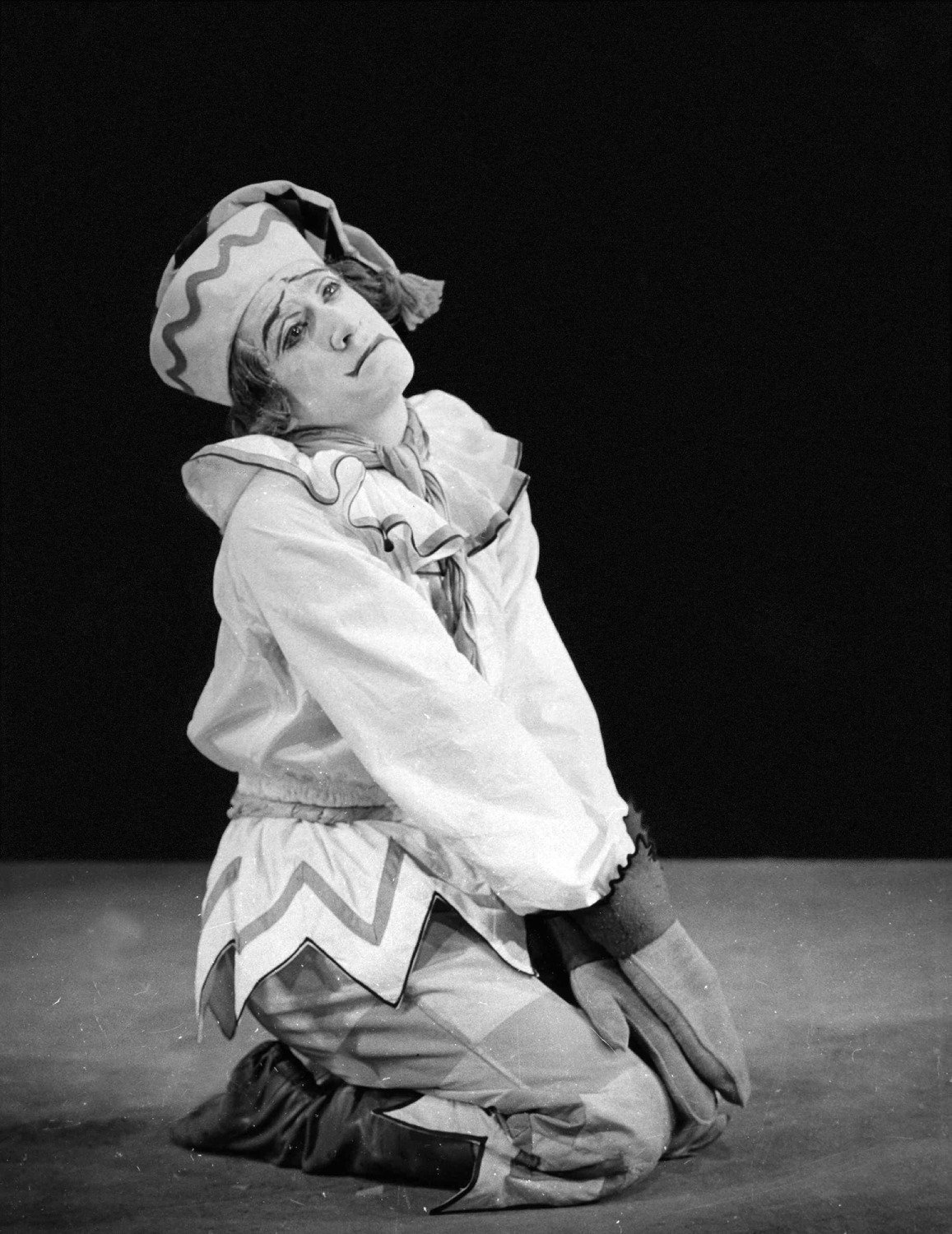
From the vagaries of casting to revealing how Bottom in Frederick Ashton’s The Dream came to dance on pointe, Alexander Grant bounds through 12 minutes of reminiscence at the whistle-stop speed he could move on stage – with every nuance in place. He confirms how Ashton’s private thoughts, ideas, inspiration and concentration were never disclosed until the moment of communication in the studio. The music, the dancers, the spirit, in that moment all came mysteriously together. In this interview, recorded in 2009, Grant talks to former Royal Ballet dancer and teacher Frank Freeman. The interview is introduced by Jay Jolley.
First published: October 27, 2026
Biography
Alexander Grant is of New Zealand descent and was born in Wellington on the 22nd of February 1925. His passion for dancing was first discovered at the age of six after being taught to perform a simple folk dance. He started taking lessons at the age of seven, tutored by Kathleen O’Brien and Jean Horne, and became an experienced amateur by the age of just 15. He won a scholarship from the Royal Academy of Dance, which enabled him to take his studies to London. However, the outbreak of war across Europe forced him to remain in New Zealand where he continued his studies at Wellington College from 1939 to 1941.
During the war, he performed in front of the troops in the Pacific as entertainment. The war ended in 1945, which enabled him to travel to London where he enrolled in Sadler’s Wells Ballet School in 1946 at the age of 21. He spent only a short period of time there before he was invited to become one of the founding members of the Sadler’s Wells Theatre Ballet. Whilst on his first tour with the young company, he was transferred to the Sadler’s Wells Ballet (based in Covent Gardens). He was then swiftly promoted to a soloist and was noticed by Frederick Ashton who cast him as a music hall hoofer in the “Popular Song” duet in Façade.
Grant was a dancer with The Royal Ballet for 30 years, from 1946 until 1976, and during that time he appeared in 30 Ashton ballets. Of all his roles, the two most famous are undoubtedly the sweet simpleton Alain in La Fille mal gardée (1960) and Bottom the Weaver in The Dream (1964). In 1965, he was appointed Commander of the Most Excellent Order of the British Empire (CBE). Grant became director of Ballet for All, the educational group with The Royal Ballet, in 1971 when he was at an age where he was physically limited in the frequency of his performances. He retired from The Royal Ballet in 1976 and accepted the role of artistic director for National Ballet of Canada. He died in hospital in 2011 at the age of 86.
Transcript
in conversation with Frank Freeman
FRANK FREEMAN: So, you won your scholarship to England…
ALEXANDER GRANT: Before I went, two professional ballet companies came [to New Zealand]. One was called the Russian err…
FRANK FREEMAN: Ballet Russe de Monte Carlo?
ALEXANDER GRANT: Ballet Russe de Monte Carlo and the other was called the [Ballet Russe de] Colonel de Basil. And somebody had this idea that it would be nice for me – or nice for them – if this boy did my famous Russian dance for them. So, after their class one day, I was brought in, and in my costume and everything, and I did my Russian dance and they all stood by the barre and looked, like that.
Anyway, I got to England and there I was sent to Sadler’s Wells [Ballet School]. What school had been, of the older members, were all being used to form a new company at Sadler’s Wells to take place for the old one which was going to open at Covent Garden. This was 1946.
I was then told that I would do my classes with the newly formed company at Sadler’s Wells, and the people in the company were people like Kenneth MacMillan and John Cranko. And one day, after class, we were told to wait because Frederick Ashton was going to come and look at the company, the group, because he was going to cast for Façade. They were going to open with Façade and I’m standing at the barre with a boy called Donald Britton, and Donald Britton and I were the same size; looked very much alike and had the same kind of physique and everything, and we’re standing together because he was very friendly with me from the beginning. And so, I’m standing at the barre with him. I could see Ashton talking to Peggy van Praagh there, “This one and that one, and these two boys”, I could see him say, “they’re so so,” and “Oh no, no, no, no, no. He’s not in the company. He’s just a student just come over to, to do classes with us, but he’s not… he hasn’t joined the company.” Anyway, Freddie got his way, and we were chosen for the “Popular Song”. Anyway, and because they were going to go on tour, the first they went to Exeter and then to Brighton.
FRANK FREEMAN: So, this was the very first tour? It was…
ALEXANDER GRANT: Very first tour.
FRANK FREEMAN: Sadler’s Wells Theatre Ballet, wasn’t it?
ALEXANDER GRANT: Yes.
FRANK FREEMAN: Yeah.
ALEXANDER GRANT: The Sadler’s Wells Theatre Ballet. The very first tour. I was on that tour. During that time, also, I was suddenly called to Covent Garden. They opened with The Sleeping Beauty on the 20th of February.
FRANK FREEMAN: 1946?
ALEXANDER GRANT: 1946.
FRANK FREEMAN: Yep.
ALEXANDER GRANT: And I managed, after a week or so, to get a seat in the gallery for 2shillings and sixpence and see everything. And then, soon after that, I was suddenly called to go at, err, be in Covent Garden at six o’clock because they were short of a boy. Somebody was ill, and [I had] to learn the Farandole. So, I had to learn the Farandole at six o’clock and then I was on, but luckily the Farandole was as a peasant [dance]. You were just pulled around with your hands and, I mean, anyway because I had had so much experience, I must have looked as though I knew what I was doing even if I didn’t.
FRANK FREEMAN: I’m sure you did Alexander!
ALEXANDER GRANT: And during that time, I was suddenly asked by Joy Newton, the ballet mistress, she said, “Have you ever done the Russian Dance, Alexander?” I thought, “Ooh”. I said, “Yes, I have,” and there was a Russian dance in it [The Sleeping Beauty]. The “Three Ivans”, it was called, and Harold Turner was doing [the] Russian Dance one night and Blue Bird the next. It was all too much. I mean, he wasn’t getting any younger, Harold Turner. And anyway, she said, “You’re on.” She said, “You’re on on Saturday matinée in the thing as one of them. As one of the boys,” because they had an injured boy there. So, there I was on the Russian Dance and then I must have done that alright because suddenly she said, “Oh well, we’re going to teach you the middle one – Harold’s part – because Harold really is having too much to do”. So, then I became the middle Russian boy, in which I did for nearly 20 years. But then I asked later, I wondered how she knew that I did the Russian dance, and I found out later that Joy Newton was a friend of a woman called Anna Servaskaya who was a teacher under an English name in London when she came, but she was a member of the company of, in New Zealand. And she saw me do that Russian Dance and she said, “I think that boy that’s just come from New Zealand, the boy I saw do a Russian Dance at the thing.” That’s how she knew I do the Russian Dance. Isn’t that extraordinary?
FRANK FREEMAN: Extraordinary.
ALEXANDER GRANT: So, I was then asked to join the [Covent Garden] company in September, and I’d only arrived in February, and I joined The Royal Ballet in September. Mainly because I was so important to do the Russian Dance and boys didn’t do Russian dances in those days, you imagine. It was all, all injuring themselves, but I’d done that since the age of six and now my legs were strong, and I was full of meat and butter from New Zealand. Anyway. So, I had lots of energy.
Soon after that, the next year or it might have been the same year, I can’t remember, [Léonide] Massine, who was in Manchester doing the Bullet in the Ballet, a play by Caryl Brahms and [Ninette] de Valois heard that it wasn’t coming into London. And so, she’d thought, “Well, Massine would be free”, and she got hold of him and asked him to come and work with the company. So, he came on a Sunday to look at the company, and we all were given a class. Told to come to class on Sunday and I thought, “Well, I’ve got to make an impression here,” and the one thing that I could do particularly well and had, knew I could jump. I had a very good elevation. So, I jumped myself silly in that class so he would notice me, of course, and believe it or not the first ballet he did was [La] Boutique Fantasque and I was chosen as the Poodle with Pauline Clayden. So, I could jump around as a poodle.
Then he did a ballet called [The] Three-Cornered Hat, [Le] Tricorne, and I was chosen by Massine because of my jumping, I think, as The Dandy which has been a role of [Stanislas] Idzikowski. So, it was quite a well-known role and I did The Dandy, and although Massine didn’t say that I had to jump it, because I don’t think you had to jump it particularly, every chance I got to jump in The Dandy I jumped. So, again, I was noticed for my jumping.
The next thing, the year after that, he did a ballet called Mam’zelle Angot and the most amazing thing about it all was that my partner was Margot Fonteyn. So, here I was just a year in the company dancing with Margot Fonteyn. Can you believe it? The other principals were Moira Shearer, Margot Fonteyn and Michael Somes. And we took five months nearly to do that ballet because he was at the same time making [The] Red Shoes.
FRANK FREEMAN: Oh yes. So, he was with Moira Shearer as well?
ALEXANDER GRANT: And I think he wanted to spin it out, anyway, because he wanted the job. But anyway, it was a big success and, of course, it “typed” me really for the rest of my career.
FRANK FREEMAN: And it was at this time that you started to work with Sir Frederick Ashton, was it?
ALEXANDER GRANT: Yes, my first created role with Frederick Ashton was a ballet called Les Sirènes, which he also did around about 1946.
FRANK FREEMAN: And you were the boy that…
ALEXANDER GRANT: I’m the boy that jumped through the hoops…
FRANK FREEMAN: Jumps through the hoop? Yes.
ALEXANDER GRANT: With Pauline Clayden. Yes. And that was the first created role with Ashton.
FRANK FREEMAN: And then was it soon after that that you created the role of the Jester in Cinderella?
ALEXANDER GRANT: Yes, but in between that, believe it or not, Brian Shaw who had been an original in Symphonic Variations, which had been the big hit of 1946, had to go in the army because they were still going in the army in those [days] and I was suddenly thrown on in Symphonic Variations, which I did for two years. That was before the Jester.
I was there in 1949 when the company first went to America.
FRANK FREEMAN: So, you were there on…
ALEXANDER GRANT: Yes. I did the Russian Dance, of course, in Sleeping Beauty in 1949 [at the Metropolitan Opera House, New York].
FRANK FREEMAN: And that was a great historic occasion.
ALEXANDER GRANT: That was the most fantastic evening I’ve ever spent in The Royal Ballet. They never stopped applauding all the way through, the audience, and there was such a reception at the end. Even before the curtain went up. I mean, [conductor Constant] Lambert got the applause and then…
FRANK FREEMAN: Constant Lambert? Yes?
ALEXANDER GRANT: [Oliver] Messel got the applause for the scenery and then all the Prologue, and then when Beryl Grey came out the place went mad during the Lilac Fairy variation. They just brought the house down and there was poor Fonteyn quaking in the [dressing] room. She hadn’t even appeared yet and Beryl had already brought the house down. How could she beat that? But she did.
FRANK FREEMAN: Yes. The ovation must have been tremendous.
ALEXANDER GRANT: Oh, it was fantastic.
FRANK FREEMAN: And just going back to your friendship with Sir Frederick. Did he ever talk about the ballets that he was creating to you?
ALEXANDER GRANT: Hardly ever. No, no, no. And I never asked him. No, he didn’t.
FRANK FREEMAN: Not even the ones that he… that you were actually making with him?
ALEXANDER GRANT: No, no, no, no, no.
FRANK FREEMAN: You would just walk into a studio?
ALEXANDER GRANT: Never talked about it. No.
FRANK FREEMAN: Yeah.
ALEXANDER GRANT: He never told me what he wanted. Well, he wouldn’t work with you until you got in the studio and then he would play the music that he was going to use for you, and what he liked is if you sort of danced a bit to the music and he would say, “No. It’s not like that. It’s not like that,” or if it was like that he wouldn’t say anything and they will use it, you see? And then he would work on it ‘til he got it the way he wanted it in the way that it knew… he knew that it suited you because he was marvellous at. He’d worked with stars in revues and that in the Cochrane [Revues] and that, and he knew how to use what people had. Their assets. Frederick never had anything too long in the thing. He never wanted to bore the public.
FRANK FREEMAN: Yes, because he always said it’s always better to be too…
ALEXANDER GRANT: Yes.
FRANK FREEMAN: …short than too long.
ALEXANDER GRANT: Yes.
FRANK FREEMAN: And The Dream? Bottom – how was that created?
ALEXANDER GRANT: Ah. I knew I was going to be Bottom. Frederick… sometimes your name wasn’t even [put up] on the [notice] board in a ballet until he wanted to use you. You didn’t go up into the thing. I had seen a postcard of a chap in Stratford-on-Avon who was playing Bottom, dressed as the Donkey with a head on and standing like this with leggings like that down there, and little black shoes and he looked as though he was en pointe, and I said, “Look,” I said, “here, this Donkey is en pointe.” And then Freddie said, “You, en pointe? You want to be en pointe?” He said, “Not with your feet.” I said, “But you won’t see them Frederick, because”, I said, “they’re, they’re covered up.” I said, “You have the trousers over. You just see the end of them.” He was worried I had no arch [in the feet], you see?
We’d come for the first rehearsal. He says, “Where are your pointe shoes?”, and then he choreographed it, even though we didn’t have any pointe shoes. He choreographed it as if I was en pointe. Did the whole thing in one rehearsal and each time we did a rehearsal of it he would say, “Where are your pointe… how do I know you’re going to be able to do this en pointe? I’ve not seen you,” and then [he] said, “Where are your pointe shoes?” I couldn’t get a pair big enough! No. No pair they could find for me were wide enough or big enough. So, I had to squeeze into these pointe shoes, and I squeezed into them and just grinned and bared it, and I knew I could do it en pointe and everything. So, when I did it en pointe Freddie didn’t say it was bad. He never said it was good. He never used to hardly ever say it was bad or it was good. Anything. I was 30 years with The Royal Ballet. I was very, very fortunate in my whole career as a dancer having Ashton create so many roles. I think I might have as many roles as Fonteyn.
You may also like...

Monica Ratcliffe
Rick Guest
