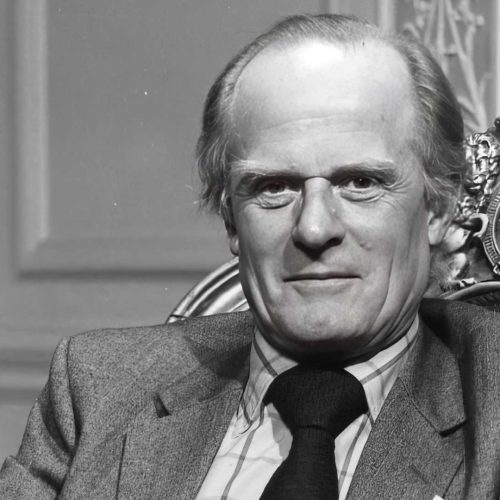
Rick Guest
In this 2023 interview with Jonathan Gray, dance writer and former editor of Dancing Times magazine, photographer Rick Guest talks about the inspiration and surprise he found when working with dancers for the first time, and is especially illuminating about his collaboration with Edward Watson, the former principal dancer with The Royal Ballet. Talking fluently and expansively, Guest reveals in the interview how an “outsider” eye can help bring a different, and contemporary, angle to the world of dance.
First published: June 23, 2026
Biography
Rick Guest began his career in photography in his late twenties, following studies in science at school and university. Although he received no formal training, Guest soon gained a reputation for his work in the advertising, fashion and music industries. Guest later found inspiration in the world of ballet and dance where his portraits of dancers and choreographers, often made in collaboration with the stylist Olivia Pomp, have received wide acclaim. His dance photography was regularly featured on the cover of Dancing Times magazine and other publications. In addition, Guest has published several photographic folios on dance, including What Lies Beneath and Language of the Soul, and his work is included in the collection of the National Portrait Gallery in London. His most recent work includes a new folio, Strength and Grace: Portraits of The Royal Ballet School, which was commissioned to mark the centenary of The Royal Ballet School.
Transcript
in conversation with Jonathan Gray
RICK GUEST: There was no one artistic in my family. There was no thought for that at all. I was a bright kid, and so it was all sciences. I’ve got, sort of, 12 O Levels and four A Levels, all maths, maths/physics, chemistry. Not interested in art at all; dropped art as soon as you could stop finger painting at, sort of, you know, ten. Have very little memory of it, of anything like that, or ever being… I think because I was… sort of had a bent towards the sciences, it was never encouraged to do both; they didn’t go hand in hand when I was a kid, and maybe they hopefully do a bit more now, but they were seen absolutely polar. You’re either this or you’re that, and so I left it completely behind.
However, having grown up being sat in front of a TV through the ‘Seventies [1970s] for massive periods of time, being an only child, I think that visual thing was there in the background, but completely unacknowledged and completely not looked at until much, much later. How old must I have been? I must have left school. I’ve moved to London, I must have been about 18, 19. And I was seeing a girl who was a model agent, and she said, “Oh, there’s this new TV show called The Clothes Show…,” which was a very new thing on TV at the time, “…and we have some people trying… just general public trying out to be models, and they’re coming all to Covent Garden, on a rooftop, one Saturday. Do you want to come and take some pictures?” And I think I must have had a camera. I mean, she must have witnessed some sort of… That I was doing that, that I was taking pictures around the house somehow.
And so, I went along and I photographed a few of these guys who just turned up, who weren’t proper models, but had aspirations to be, and err… the pictures were OK. But it was, for me, it was a revelatory moment of… Because you would photograph something, you didn’t know what it looked like, there was no checking on the back of a camera at that point. You took your film down to a lab, and they came back with a little contact sheet and a pile of negatives, and you looked through a loop, and you’d made a thing, and when you printed it, you’ve made a… you’ve made a thing, and I’d never made a thing before. For all the sciences, it was always very… You know, O Level and A Level, it’s very theoretical, there’s not much sort of experimentation or you’re not making anything. You’re not firing things through the air, which is really what I wanted to do. And so, having made a thing, it was just this… this wonderful moment and I thought, “Well, if I could just survive doing this, this would be amazing.”
JONATHAN GRAY: So, it was a complete surprise to you then, was it?
RICK GUEST: Complete surprise. Absolute surprise, and beginner’s luck the pictures were OK. And so, they used a couple, and then you saw them on cards. You know, models used to have cards – z-cards – that they used to carry around, and so, you know, half a dozen of those came out, and it became real.
It’s very odd how there was this moment when an idea becomes tactile, in a way that potentially, today, you know, kids don’t have that; teenagers don’t have that quite… quite… that sort of arty… unless they’re sitting there with pencils or paints and paper, photography is now illusory in many ways.
JONATHAN GRAY: And instantaneous.
RICK GUEST: And instantaneous. And I think, for me, the biggest issue with digital photography now is that you don’t get punished by screwing it up; it doesn’t cost you anything, you don’t learn because… You don’t learn in the same way. Not that you don’t learn, you don’t learn in the same way, I guess, because, you know, it’s just there, and you can shoot 200 frames, 500 frames with gay abandon…
JONATHAN GRAY: Hmm
RICK GUEST: And so, when you mess it up and you’ve only shot one roll and everyone looks at you afterwards going, “Where’s the shot?”
JONATHAN GRAY: Yeah.
RICK GUEST: Err, and so, err, yeah. You learn a lot faster, and you don’t second guess yourself; you become more intuitive, because you’re not looking at it in that camera.
JONATHAN GRAY: As a novice then, Rick, did you go about learning how to formally take photographs or is it something you did on the wing or…?
RICK GUEST: Yeah. Err. I mean, everything’s been on the wing [both laugh] ever since, err, but I was very lucky. I had been seeing this model agent, this booker… And so, I suddenly became around other photographers, because you used to go to the laboratories, and you’d be standing there with ten other guys who would come out of dark spaces and put things on walls, and you would talk. Umm, that all did change. As soon as we went digital then you never met anyone else.
JONATHAN GRAY: Mmm
RICK GUEST: It was very strange. There was this incredible camaraderie, even people that you didn’t like particularly, if you liked their work or, err… and you would always discuss these sorts of technical issues.
So, then I started assisting; I assisted mostly fashion guys to start out with, and I was lucky. I fell in with some really good people, and I fell in with… you know, one chap in particular, a guy called Glen Luchford, who is a… is… continues to be one of the most gifted photographers I’ve ever worked with, but he was very very bad at explaining things. So, he would work very intuitively, very quickly. He was very well referenced, which wasn’t a thing I knew anything about – the history of photography – so I would say, “Oh, I like that shot by this guy.” And he’s like, “Well, if you like that, you need to look at this guy who came before him. And if you look at this… this guy, this German guy just before the War was doing this, and then this guy was doing this in America in the ‘Twenties [1920s], and you follow that thread back.” And he was very good at showing me sort of where everything came from. Err, but he was very bad at explaining his own work, and so he would always come out with some rubbish about why he’d done something, so you’d have to kind of work it out for yourself. And because I’m, you know, very curious, I was always sort of down the rabbit hole trying to find out and unpick it. What was good about it, or what I thought was good about it.
JONATHAN GRAY: So, that was an education in itself…
RICK GUEST: Yeah…
JONATHAN GRAY: … sort of learning…?
RICK GUEST: …completely. I assisted in a way that, again, people don’t anymore. Err, I was at that sort of… that changeover point where people were assistants for… many, many years, and the whole business of photography was very… It was sort of very much different disciplines. So, if you were a fashion guy, you shot fashion; you assisted fashion guys. If you shot music, album covers, that’s what you did, and those are the kind of guys you assisted. Cars, the same. Landscapes, the same. Food, another thing, you know, and no one crossed over. And I was sort of the first generation that a) still wanted to assist a lot of different people, because I was still curious about everything, and kind of wanted to shoot everything, in a way that now that exists, but then it kind of… People didn’t cross over from one discipline to the next.
I will never forget the first time I was shooting cars. You know, the guys in the studio were like, “What are you doing here? Who are you?” And what… You haven’t come out of that world; you’ve come out of another world. And it’s really… it was considered heresy, you know? So, to jump disciplines was a very odd thing, but I… it’s something I’ve always just been interested in a lot of different stuff.
JONATHAN GRAY: From working in… as an assistant, what… How… What happened then? Did you start working on your own stuff?
RICK GUEST: Yeah. The thing is it’s… You get to a point where, in this country – it’s slightly different in America and always has been – you’re an assistant to become a photographer. In America, there are people who are assistants, who are assisting, you know, my agent and older, even now, which is actually quite nice and quite comforting.
JONATHAN GRAY: And that’s their job?
RICK GUEST: And that’s their job.
JONATHAN GRAY: Yeah.
RICK GUEST: Yeah, they’re… And it’s not seen as an apprenticeship. Whereas in England, it’s really seen as an apprenticeship and you… You are going on to something else and at some point, you know more than the guy you’re working for, you know? And you’re working freelance and so you’re working with a lot of photographers, and it becomes a bit of a, “Oh, I could do this, ‘cause I know enough”. Umm. What you don’t understand at that point is that, as soon as you start to become a photographer, it’s actually an entirely different job and all the parts of your brain that were dealing with all the technical stuff, and all the, err, sort of, you know, lighting and everything else, suddenly you’re dealing with clients, and you’re dealing with a lot of other crew, and you’re managing a crew, and you’re talking to models or people… sitters, and so it’s an entirely different thing. And so, you go from being, you know, the best at what you do in the assistant world to the bottom, and you’re suddenly working… You know, you’ve been working with great photographers, big budgets, shooting super models or whatever you’re doing, suddenly you can’t get a good model, because you’re starting out and you can’t get hair and make-up, and you can’t get all these things, and so you start at the beginning…
JONATHAN GRAY: So, were there particular things that you were drawn to as a photographer that you were inspired by?
RICK GUEST: Yeah, I love the technical side of it, so most of the shoots I would do were quite technical. I was drawn to technical, which is why I ended up shooting a lot of car stuff as well, because it’s… It’s even more technical!
JONATHAN GRAY: How do you make a car interesting to photograph?
RICK GUEST: Err, I think it’s like everything. It comes back to starting at the beginning of what are you shooting it for, and what is anyone trying to say. So, if you’re working for a car company, for me, I nearly always go back to the sketch of the designer on a napkin, you know? These are the important three lines on the car: the mid-line, the roof line, the shoulders over the wheels; whatever that is.
JONATHAN GRAY: Yeah.
RICK GUEST: You’re trying to understand what they’re trying to say about their design. Of course, there’s lot of detail and that comes with their design as it grows into an actual car from the drawing, but if you have an understanding of that you know what to pick out in lighting, and what angles to shoot it on. And so, if you want a car to look very muscular, because it’s a sporty car that’s, you know, a sportier version of a car, umm, you would naturally come lower down to make it look more aggressive. You would naturally want a wider lens to make the shoulders look more hunched. You would naturally kind of do… And it’s basically using that cultural language to translate whatever anyone’s trying to say about the design of the car. But it’s equally the same as, you know, if you’re photographing a person: you have to understand the reasons you’re there, and what’s someone’s trying to communicate, whether it’s… You know, if I’m working for The Royal Ballet or I’m working for, you know, I don’t know, err… Audi, you know, it’s… I personally feel you have to have an understanding of just who your client is. But what’s the reason for this? You can’t… It’s not just a recording…
JONATHAN GRAY: Mmm
RICK GUEST: …you know, it’s a statement, it’s an artistic bent. As… you start editing, as soon as you pick up a camera.
JONATHAN GRAY: Yeah.
RICK GUEST: As soon as you choose a lens, as soon as you stand in a certain place, and it’s the one thing that kind of comes up a lot, and… and I’ve done a little bit… little bit of teaching over the years, and the thing everyone wants to know is why do you stand here and not there?
JONATHAN GRAY: Mmm.
RICK GUEST: And it’s the one thing that really you can’t explain, not in terms that someone can emulate… You know, it doesn’t mean that you can’t emulate other photographers, but it’s… it’s sort of thing… Well, if you stand in front of someone you compare what’s in front of you with everything you’ve ever seen in your entire life, and this feels comfortable: that’s the only way [laughs] I can kind of explain it. Umm, and so having an understanding of what some… If you have a client, what they’re trying to say, umm, and being… you know, obviously being creative is what we do: you stand with people, you sit with people, and they talk about their products or their… you know, their opera house or whatever that is, and you absorb everything they’re feeling about it. And that’s what we do, we absorb slowly, slowly, and that comes out as a physical manifestation in a photograph or a film; you know, that will appear, that… that… that sentiment that’s what we do.
I’m not entirely sure how it works; it is an alchemy. I don’t always entirely enjoy trying to unpick it, because in case I can’t put it back together. But it’s… that is what we do: we take everything that you know about something and you’ve heard about something, and people are trying to say about something, and you make it… you make all those technical and artistic decisions to end up with a photograph that represents that.
JONATHAN GRAY: So, you’re working with… in advertising and fashion?
RICK GUEST: Yeah, and music; used to do a lot of album covers. I started in fashion, then I kind of got into music, then I started working editorially fashion, and then I got in cars, because GQ, who…
JONATHAN GRAY: Explain what editorially fashion is.
RICK GUEST: Err, so magazines. So, just magazines really. So, I was working for… You know, when you start out, going back in time, you start working for the newspapers, so you’d work for the Stan… Evening Standard was the big one when I was a kid, and if you got shots into the Evening Standard, everyone saw it, everyone; you know, aunts coming out of the woodwork that go, “Oh, I saw your picture.” [laughs] Umm, err, and then you start working for the Sundays [Sunday Newspapers], the magazines; err, that was… that’s the next sort of… that was then the next step for pretty much everyone. And the kind of art directors you were working with there – The Sunday Times, Sunday Telegraph, The Guardian, Observer – they often went on to magazines like GQ, Esquire, the Vogues, Harpers obviously, and a few others. And so, you kind of went with them, your journey went with them if you got along and you produced nice work.
Err, and so that was really my route: sort of start with newspapers, then magazines, and then the magazines obviously have a wide amount of stuff that they photograph. So, if you’re shooting fashion for them, but you express an interest in furniture or objects or cars, they have, you know, a page somewhere. And so, you know, if you get lucky and you push the right… You just happen to be in the right place at the right time, when you mention it, and they need something, [laughs] and you’re there and you’re available; availability has always been a good attribute to have. [Laughs] So, I just got lucky, you know? I just got lucky. I worked with enough people doing enough things that then translates into advertising.
So, with editorial, with magazine work, they kind of let you get on with it, you know? They say, “Oh, this is a new car from Maserati, and this is what…” you know, “This is what the car’s about”; you know? It’s a new version, but it’s aimed at these… this demographic, at these people, or whatever. Umm, and then off the back of that, you’d have enough of those to go to an advertising agency and say, “Look, I’d like to work for Ferrari or Audi” or whoever, and then you make the jump, and actually then you’re making a living out of it. Editorial, there was very little money in it, so you scraped away, umm, for a long time.
Err, but I was running all these things at the same time, so I was still shooting album covers, you know? I was still doing stuff for, I don’t know, Jamiroquai, Depeche Mode, and all sorts of people back then, and that was great fun as well. That was a different world back then for music photography.
So, Depeche Mode was one of the last big jobs I did where, you know, you went to the American desert for ten days. You know, those jobs just don’t exist anymore. The kind of budgets that we were working on, and sometimes you wouldn’t even shoot the band; you know, you’d just be wandering about shooting stuff that caught your eye because they trusted you. Umm, err, and so that sort of model’s gone a lot now. [Laughs]
JONATHAN GRAY: So, Rick, how did you become involved in taking dance photographs then? What was the inspiration or the…? How did it happen?
RICK GUEST: Surprisingly for me, there was no formal thought whatsoever. It was just serendipity. So, I had, in many ways… I suppose if you can see me as a specialist, I specialised in anything that was high performance, so it was high performance cars, it was Formula 1 cars. I was doing a lot for Nike at that time, and Adidas. I was doing a lot of sportsmen, you know, from… a lot of footballers, relentless footballers, the Cristiano Ronaldos, the Leon Messis, the Wayne Rooneys of their days, and at the same time, I was doing a lot of other sports. I was doing, like, Rafael Nadal, you know? Even underwater stuff with [Michael] Phelps and Ryan Lochte and those guys, err, anything that moved, and you could kind of go, “Now.”
That was, kind of, became my thing a little bit that I enjoyed, even though, technically, they were always very lit, you know? I still enjoyed that side of it. It boiled down to me and something moving, going click, now; that was kind of… you know?
JONATHAN GRAY: A kind of spontaneity about it.
RICK GUEST: Yeah. And capturing that moment. And often, especially with sportsmen, you could capture a moment, and you think, “Oh, I’m… that’s… that’s mad that that’s possible to catch that”. It’s a very intuitive thing
So, I’d been doing a lot of that work. And then… So, there’s a stylist, a fashion director, who I’ve been working with a lot, who I was… had become a friend. We’d done quite a lot. Her name’s Olivia Pomp, and she called me up one day, and said, “Oh, I’ve got this job for the FT [Financial Times].”
JONATHAN GRAY: Right.
RICK GUEST: For the Financial Times, for their weekend supplement. And they used to have a monthly, and it wouldn’t be called that now, it was always called Man in a Suit, and it was one page, and it was a bloke in a suit, invariably, but he could be anyone. He could be a doctor, he could be a hedge fund manager, he could be a scientist, he could be absolutely anything, sportsman.
So, she called me, “Oh, I’ve got this job. Are you up for doing it?” I said, “Yeah, I’d love to do it; yeah, let’s go. What is it?” You know, I tend to say yes to most things. [Both laugh] And she said, “Oh, it’s a dancer at The Royal Ballet.” I was like, “Oh, that’ll be interesting, cool.” So, off we go to the top of the Opera House in Covent Garden. I don’t really know what to expect. I had been to the ballet a couple of times; my wife was a ballet nut. When we first met, she lived in Covent Garden and she took me to see Irek Mukhamedov, Viviana Durante in something; that was the first ballet I’d ever really seen, and I was blown away, but I was at a time where I wasn’t really that interested in what was going on on the stage apart from the lighting. I sat there being obsessed by the lighting more than anything else, even though, of course, they’re amazing, umm, but it hadn’t sunk its teeth into me, hadn’t stuck.
Anyway. So, there we are in the top of the Opera House, in one of their large rehearsal rooms, which are all white spaces, top lit with daylight and they have one window that looks out over the whole of Covent Garden. And it was a fairly flat light day, there was a lot of low cloud, and in walks this man who [is] very, very pale, with very, very red hair and he goes, “Oh, hi. I’m Edward.” I went, “Hi, Ed.” Err, and he was very quiet and I didn’t expect him to be so small. And he’s not particularly small, but he’s… but very slight, and I expected him to be bigger, and I didn’t quite umm… what… I didn’t quite know why I expected him to be bigger.
JONATHAN GRAY: What? Muscular? Or just bigger?
RICK GUEST: I think it’s something that I came to later on, to understand that on the stage, they’re bigger because of the charisma. I didn’t quite understand the charisma thing. So, Olivia puts him in this very strong turquoise suit, so I’ve got this guy in this white room who is almost white himself apart from this ginger mop of hair in this turquoise suit, so he’s kind of a floating head. And when you take portraits… and I hadn’t done a great deal of portraits at that point, to be fair. Umm, I’d always been shy of it, because I didn’t… I think I used to hide behind all the technical stuff, so it’s a confrontation thing. A lot of people when they start out, you start on very long lenses, and as you get better and more confident you get, so your wider lenses are closer.
Umm, and sometimes you just start, you know, you just start. You don’t know what you’re shooting, what it’s gonna look like, you just start. And, OK, going back when it was the film days, I would start without any film in the camera, just to get a feel, just everyone can settle in, we all relax. We all know what we’re doing, let’s just kind of calm down, and I will find the angle; it’s really hunt the angle, and there is always one that jumps out pretty quick, not always, usually, hopefully, fingers crossed. So, I start looking at him, and he’s just there standing looking back at me, and I don’t see anything really and I’m moving around him. I’m going backwards and forwards, and I’m making all the right noises to, hopefully, encourage him to relax, but it’s just not happening. And it had happened to me before a couple of times and you push through, you find, you have to come away with it: that’s the joy of having been in advertising, you have to come away with it, you can’t not have it, you can’t fail.
JONATHAN GRAY: Was he being still or was he moving?
RICK GUEST: He was being still, he was being still, which I think was part of the issue, because, of course, dancers, like actors, like the actors they are, to be fair, umm, when they have the shell of a character, it’s much more easy for them to know how to be.
When it’s them, when you scratch away, you take away that shield, sometimes they’re very vulnerable and don’t know who they are or what to do, err, and… and can be a little freaked out, err, and we were in one of those moments.
So, I was trying to be soft and, you know, I have a lovely crew, we’re very gentle, we’re very easy, hopefully that’s how it’s perceived; however, whatever the panic is underneath it all, we’re calm. Umm, and as luck would have it, this little ray of sunshine breaks over Covent Garden, and this strong beam of sunlight shoots through that studio and it hits him, like a spotlight; like a spotlight at the end of a performance, and his cheekbones come out of nowhere like razor’s edges and his jawline that you could cut paper with, and these astonishingly coloured eyes, just these incredible, incredibly powerful eyes. And, of course, I react how anyone would react, you go, you breathe in, you know, it’s… it was almost shocking in how amazing it was to see him chiselled when it was just this sort of flat, like flat colours, one behind the other. And, of course, you know, he’s a performer, so he’s… he feels me go, he feels the intake of breath.
He feels, the “Oh, Wow” as he felt on stage his entire career. And so, he then reacts by throwing that charisma switch, and I don’t know where they keep it, I don’t know how it works, but, holy, when they pull it, it just like, “Oh!” and then he’s big, and then he’s properly big. And, you know, handful of frames, and I was like, phur… “Do you know what? I think we have that; you know, we’re done.” He’s like, “Oh, really?” I was like, “Yeah, yeah. I think, yeah, it’s a…”
JONATHAN GRAY: And is he still stand still or…?
RICK GUEST: Still just standing there; little bit of movement, but not really. And then he goes to me, “So, err, do you want to see me dance?” And I’m like, “Oh, err, do you know what, it hadn’t actually crossed my mind!”
You know, I’d always imagined a portrait of someone to be like that, to be a visual representation of what they look like. And it was part of a very big thing for me – and it had kind of been there in the music work – is that, actually, most of us like to see people doing what they do.
You know, if you’ve got a poster on a wall of someone that you like, they’re doing what they do, and the truest portrait of them in many ways is that… is them lost in their… in the thing that they do, that is who they are, more than this is how they look.
So, I was like, “Yeah, yeah, sure: that would be great,” you know? And I literally just sat down, I didn’t… I wasn’t taking photographs, [laughs] just watching. And he started to move and I think the greatest joy in all of my journey with dancers is the fact that they’re dancing in front of me, five feet away, doing their thing, the best at what they do in the world, almost, you know? Often without question, and it’s right there, and it’s electric. And I was so transported and so lost in this person moving and the sort of recoiling in… I think just… You see yourself outside of yourself going, “Why am I feeling these things from this guy moving in front of me? How does that work? Why am I feeling anything? It’s a guy just moving; there’s no role; there’s no…” you know? There’s no character; it’s not part of a narrative, but, sure as hell, I was feeling it. Err, and so I started taking a few photographs, of course – couldn’t help it. Anyway, then he stopped and there was no music, just moving.
Err, and then it’s this… it’s this odd thing that dancers do, then they just stop doing it, and this… this bubble gets burst. It’s a very odd and very precise… It is like a bubble being literally burst. You’re completely in this emotional thing with them, and then they go, and so that’s that, oh, ah. “Wow, OK, we’re back: three-two-one, we’re back in the room, OK”. Anyway, he goes off to practise or… or whatever he was doing next, at a rehearsal. And err, then Press Officer at The Royal Ballet, Rosie [Neave], umm, who was fantastic, she said, “Oh, was that OK?” I said, “Oh, my… You just have people biting your hand off, to photograph these people.”
She was like, “Well, you’d think so, but, in fact, it’s very, very hard to get press, because to the outside world, whatever you’re doing, it’s just another ballet. It’s very hard to get the story told again.” And I said, “Well…” And obviously I was there with Olivia, and Olivia and the two of us are sitting there, you know, wide-eyed, in awe of this man who has just done this thing in front of us. We were like, “Well, we work for lots of magazines, if you can get us dancers to photograph, we’ll get them published, you know, and maybe the answer…” And I think it’s that thing of having worked as an advertising guy, you work for a client, so you’re trying to understand their need, and how your work can fulfil their need. It’s not a pure artistic, “I’m gonna go and do this”; it’s, “Oh well, how could this work for you? If you need dancers out there then maybe we could do a thing where we bring other people in that wouldn’t normally do it, so maybe we could put them in fashion clothes, and you could run a… we could run a piece in the FT like that, or we could do it for this magazine or that magazine.” And… or… and Olivia ended up, you know, getting a load of Royal Ballet guys in different shows to fashion catwalks.
Because it was interesting for the outside world, and they hadn’t really seen it before, and they get to exposed to this amazing thing. I just had a very similar experience, and it’s a lovely thing to witness, because I’ve witnessed it many times, and when you see other people witness it for the first time, it’s always a kick. I just did a campaign for a shoe brand, you know? Sneakers, umm, super nice people and they had an athlete. There were three athletes, all fitness guys, big heavy cross-fit guys, and a girl, an American girl. They were all the ADHD kids who had got the… they’re all a bit manic and they’re all a bit mad, and they’re pumped, and it’s quite exciting to be around. And they had an athlete fall out at the last minute, and I said… well, a couple of weeks before, and I said, “Oh, I’ve got… I think I’ve got someone who would be great for you. He was the first person I ever saw wearing your shoes, and he’s a dancer. He used to dance with Hofesh Shechter, and he’s a guy called Phil Half… He’s quite… quite an astonishing dancer. Umm, how… why don’t you meet him, ‘cause he likes your shoes and he wears your shoes, and he’s… so he’s an evangelist already.”
And so, he goes and sees him, and then they agree to use him. And so, we’re there on a day in a shoot, and we shoot him in a studio, and we first photographed this sort of bodybuilder cum cross-fit guy, big guy. He’s amazing, does his thing. Everyone’s like, “Oh, that looks great; yeah, fantastic.” Then this American woman comes in, and she does this incredible cross-fit stuff and she’s plyometrics mad, and she’s full of beans jumping through the air. She’s incredible. And then Phil comes on. He goes, “Oh, so what do you want?” I said, “Well, Phil, let’s just put a track on and you just, you know, do your thing. You know what these guys believe in, you know what they’re about. They’re about…” You know, and we’ve already talked about fitness and flexibility and agility, and playfulness. So, then I put a track on, and he does his thing for four minutes, and he stops, and the entire room gets up and claps, because that’s what he does; that’s what performers do. It’s not just they’re moving in a way that you need them to move, they’re communicating all range of emotion. And these clients couldn’t believe that they saw the physical embodiment of all the stuff they’ve been talking about all this time, in a… and it had been communicated through someone moving. Amazing. So, going back to Ed. So, Ed, yeah… So, that’s kind of how it started. They [The Royal Ballet] started sending dancers to us.
JONATHAN GRAY: Were these for specific projects or…
RICK GUEST: No.
JONATHAN GRAY: … just on the chance…
RICK GUEST: No, no.
JONATHAN GRAY: … that you will.
RICK GUEST: A complete… Ah, you see it wouldn’t happen now. It was just one of those things we hit a window. I think it was just as Kevin O’Hare took over as director from Monica [Mason], so it was in that first little window there. So, I think we kind of went under the radar a little bit of just shooting. And I was in a position where I was doing enough advertising work, I could pay for it. And so, you know, Olivia and I just shot, and we did three days in particular where they sent us, I think, nine dancers on… on each day of three days, so we shot a lot of stuff, and we covered a lot of ground and… and… and it was all… And, of course, I approached it completely without any idea of what the hierarchy was, so I didn’t know that Marianela Núñez was… you know, was the principal dancer or that this young girl out of the corps [de ballet] was any different, so I approached it very democratically, shall we say.
JONATHAN GRAY: As people?
RICK GUEST: Yeah, as people, and as what they could.
JONATHAN GRAY: Yes.
RICK GUEST: Err, and so it was also that I treated them individually.
JONATHAN GRAY: Mmm.
RICK GUEST: And, of course, if you’re in the corps, if you’re coming through, you don’t often get seen that way. And so, our… The way we shoot is, you know, it’s me, Olivia’s on one shoulder, Frankie, my assistant, on the other, and you’re under a light, and performers offer you things. They offer up things.
JONATHAN GRAY: Do you talk to them before the kind of ideas that you’ve got, or…?
RICK GUEST: Yeah, I think you have to. I think they want to know who they are, you know? They want to know what that movement is, and it’s only if you give them enough information. It’s a very difficult one, because at the time I was trying to really get portraits of them; even though they were moving, they were portraits. And so, in my naivete, I would say, “Well, it’s just, you know, do what you like: you can stand there or you can move, what’s… you got a favourite.” And they were a little thrown by that. That’s not really what they do. [Laughs] And I think, so my naivete sort of broke through a lot of it, but also became in the way, a little bit, and so it would then be… I could then feel the stutter of ideas, and so you go, “Well, hang on. Let’s just… So, what were you doing this morning?” “Oh, we were rehearsing Giselle … yesterday.”
I go, “Well, is there a favourite bit in that?” “Yeah, yeah, OK.” And then they would just snap into it and that was fine. But the first tranche of work, and it was the first time I’d ever done… You know, I am a flibetty-gibbet, so I hadn’t really photographed a lot of stuff in the same style ever, you know? And my work, I don’t think… You know, whatever you think of it, I don’t think you’d think it was the same all the way through. Hopefully there’s a golden… there’s some little thread that runs through it. But it’s… I’d always approached things differently each time, because I’d had a different set of circumstances, in order to be there.
JONATHAN GRAY: Yeah, they’ve been quite theatrical at some times, and… but and more formally portraits of others and…
RICK GUEST: Well, so when it started, I just felt it… I just felt it needed to be the same, so I kind of stuck with shooting in the same way. And that body of work, it then became an exhibition, a book. But that body of work, I think, really the arc of that early work is a falling in love, you know? When you first fall in love with someone, you know, you don’t know really; you fall in love, how they look, how they move, how they… and so that was very much how they make you feel.
So, I think that first body of work was treated very classically. I didn’t realise… Well, obviously I realised, but I didn’t really… I didn’t really understand that I was coming in at the top: these are all Royal Ballet dancers, this is as good as it gets, you know? This is… and this is when Tamara Rojo was still there, you know? And obviously Edward and Nela [Marianela Núñez].
So, it was a very special time as well, because I was completely naïve and these amazing creatures were doing these amazing things in front of me and I… And I think Olivia and I were just entranced by it. So, the first exhibition is all classically lit. It’s all lit for beauty. It’s all sort of a nod to stage lighting. But obviously, you know, I’m obsessed with photography, always have been. I have a monstrous collection of photography books, which have to go at some point, umm, but I… when I started falling in love with ballet, I instantly started looking at the work of what’s out there, of what’s… what’s it like. And so, I really… This kind of goes back to what we were talking about earlier about the technicality of stuff before the advent of Leica, of 35mm film, of more sensitive film. You just couldn’t shoot on stage what they were doing.
And so, there was the formality of the studio photographer was really king at that point. So, if you wanted to photograph ballet dancers, you brought them to your studio, you made a set that was in some part of an homage to what happened on stage.
So, you had the Gordon Anthonys of this world, who I was… You know? Obviously, I adored the lighting, you know? It’s beautiful, it’s sort of Hollywood lighting before Hollywood, it’s so beautiful; and you have the amazing pictures. But obviously the nature of the poses are very still…
JONATHAN GRAY: Yeah.
RICK GUEST: …because the film is so insensitive, even with strong lights, so there’s a formality to it through the technical problems, the issues. And it’s only when later you get on to 35mm and you and shoot on stage and the sensitivity of film comes up a little bit; you can actually capture some of that. And sort of in between that you also have people like Alexey Brodovitch, who was, you know, the art director at Vogue in America for many, many years, who, umm… He had done a book on the Ballet Russe [de Monte Carlo], which was just all blurry, and I saw that, and I was like, “Oh my God! That’s how it feels when you’re there; that’s the polar opposite of these formal portraits”. So, I kind of…
JONATHAN GRAY: Were these on stage then, these photographs, or…?
RICK GUEST: Yeah, they were on stage. Yeah, they were on stage. It’s a beautiful book. It’s very rare. He didn’t make that many copies. I think he lost a load of the negatives to fire, you know, before he died as… but it’s a lovely… I have a copy somewhere. But they are really strong, really, and like nothing else, because they’re… The only thing that they look like to me, and… and maybe this is a bad, analogy, are [Robert] Capa’s photographs of the D-Day landings.
JONATHAN GRAY: Right, OK.
RICK GUEST: They are blurry and they are bleached, and they are about movement; very special. Anyway, so the first sort of series is the falling in love, and is the… and as I was shooting it, you know, I just… It was just fantastic to be around these… this other species that could move in ways that was just, you know, and so much easier to deal with than footballers. You know, it’s umm… In advertising, the difficulty is in response to how much money’s involved in the people that you’re shooting.
So, footballers are a nightmare; tennis players are OK, difficult, but they do most things, but a little more educated often. Rugby players will do anything you want, but will hate to do it, but they will do it. Athletes are just pleased you’ve turned up; you know? That’s kind of the sliding scale.
Dancers were just this breath of fresh air, because they were performers, and I just didn’t understand that… You know, if you said to a… So, if we’re… This is a great example. So, if you said to Cristiano Rolando, “I need you flying through the air, like this photograph of you on the back page of the Sunday papers, where you scored the winning goal for Manchester United as it was”, he wouldn’t have a clue what you were talking about. It means absolutely nothing, this photograph, so you would have a sports choreographer…
JONATHAN GRAY: Yeah
RICK GUEST: …here is such a thing. You work with this wonderful chap called…
JONATHAN GRAY: Interesting.
RICK GUEST: …Andy Ansah, who was a sport cho[reographer]… or has been for a thousand years. He’s a dear, dear friend, and he would say, “OK, Cristiano. You’re standing there, the ball’s coming in from over here on the right, the goal’s here on the left. You’ve got a guy sliding in on your… behind you under there, and you’ve got a guy sliding in there.” Three-two-one and the shot appears, because it’s a circumstance, it’s a context. If I then say, “Oh, can we just twist it round like 20 degrees,” Andy will then stand 20 paces to my right. “OK, now the goal’s over here. The guy’s sliding in here, the goal… the… the football’s coming,” and it appears then.
JONATHAN GRAY: Yeah.
RICK GUEST: But they have no sense of where their audience is, because that’s not…
JONATHAN GRAY: That’s not part of it.
RICK GUEST: That’s not part of it. You can only give them circumstance and context. So, to have a dancer flying through the air and go, “Can you just turn that a little bit?” Yeah, here you go. [Intake of breath] Oh!
JONATHAN GRAY: Yeah.
RICK GUEST: And there it is exactly the same. It’s astonishing. It was astonishing to me.
JONATHAN GRAY: So, you were learning about dance photography, but did you also want to learn about the mechanics of actually being a dancer?
RICK GUEST: Yeah, I think it’s that thing of, yeah, I’m just curious. So, I started going along a lot, a lot. I started spending a lot more time with dancers. Umm, and I think the next body of work… So, the first body of work was called And Now Is All There Is: that’s had the first shows, the [George] Balanchine line, which I loved, because with photography “Now is all there is”. It’s a very… Zen Buddhist [laughs], non-duality, err, a thing of the present, umm, being the only thing that’s important. Umm, and the book ended up being called The Language of the Soul, which is the Martha Graham line, because that’s so much part of how I felt about it at the time. I felt so soulful about it. I felt so lucky, but what happened through that is once you get to… Once I got to know the dancers a lot more, and I started to spend more time with them, and they would talk about the reality of their days, the reality of their injuries, the reality of being in pain most of the time, that gave rise to the second body of work, which was called What Lies Beneath. Specifically in that arc of a love affair, you know? At first, you think, “Oh, these people are amazing and, my God, they’re so…”, and you want to tell everyone. That’s what that first body of work was about – it’s about sharing “Look how amazing these guys are”. The second body of work was look how amazing they are; look what they’re going through. Look what… look at the anatomy. And obviously, you know, having had this ride with athletes, that was so very different; you know? These guys are Olympic athletes on any day of the week, but, at the same time, their art form is deliberately… deliberately, err, umm…
JONATHAN GRAY: Causing them pain?
RICK GUEST: Well, not just that, but it’s… it’s to hide what they do.
JONATHAN GRAY: Yeah.
RICK GUEST: Everything is to hide the… the effort that goes into it; it’s so deliberately obfuscatory, you know? “Look at this”. “My God, that looks hard”. “No, it’s easy, [both laugh] you know, that’s the…” And you’re like, “No, no, it’s really not”. And so, the second body of work was… you know? It was a bit more warts and all. I was a little nervous, because you know we live in an age where everyone wants to see behind the curtain.
JONATHAN GRAY: Yeah.
RICK GUEST: I do, too, you know? We all are like that. Umm, and I didn’t want to get to the stage, and I can’t remember who said it now, but, you know, you keep scratching away at the… at the mural on the wall, the beautiful paint, and… and behind it, it’s just wall at some point. You know, these are just people. I said once to Melissa Hamilton, who’s a first soloist at The Royal Ballet, who’s an indomitable… you know? She… the character, she… her strength of character always blows me away. I did a portrait of her, and it was a portrait for the What Lies Beneath. I’d also photographed her being incredibly beautiful for Language of the Soul, and, I said, “Look, this is a portrait of you, you know, and this is what it’s about. This is about how tough it is. This is not just the pain, the physicality, this is also about, you know, the holidays missed, the friends’ birthdays not gone to, the turning up when you couldn’t… You know, all those things, I’d like to see those, you know, in your head.” And she stood there, and it was just this astonishing moment. And sometimes under our little light, in the middle of a dark studio, even when I’m photographing, I’ll be just… you hold your breath. And they do… as I said before, they do this thing where they… they offer you up something. Some vulnerability, some fragility, some strength. This emotional little package ends up floating in between you, and you’ve just got to catch it, [laugh] if you can, somehow. And then they just shake it off, like a dog shakes off some rainwater. Oh, yes. So, anyway, this afternoon… No, no, no, that was such a moment.
I mean, often sometimes, they’ll just walk off the set, you know, out of the light, and I’ll turn to Frankie, my assistant, and we’ll just be looking at each other with tears in our eyes. It’s so moving, it’s so incredible that gift of what they can do. And so, Melissa… that particular shot is in the National Portrait Gallery, it’s hanging there now. And she looks so strong in it, and I’ve said to her, “My God. You look so… so powerful.” I said, “You guys just… it’s like titanium.” And she said, “Yeah, but you do have to remember, Rick, underneath the titanium, I’m just a woman.”
And it’s… it’s hard when you’re in awe of it, to remember how much… just normal humanity is there, because they are so other, they’re such another species sometimes. The way they can move, the way they communicate these emotions through a gesture, an arm, it’s… you know? They could break your heart with a look, you know? it’s… it’s quite something.
JONATHAN GRAY: But they must trust you as a photographer to reveal themselves like that as well.
RICK GUEST: Yeah. I guess… I mean that’s kind of… I guess that’s kind of the job with portraits is that… is just to create a safe enough space where they feel they can. The joy of the performer is that… So, the prime example is a dancer’s feet.
“I’d love to photograph your feet,” you say to any dancer, and the reply will always be: “Absolutely not. You’ve got to be kidding. They are disgusting. I hate my feet. I don’t…” And I will then go, “But, of course, they’re your Stradivarius, they’re the instrument of your… you know, your entire career, they’re incredible, and I think it’s important.” “No. Absolutely will not, shall not; it’s not ever gonna happen. I can’t bear them, they’re grotesque.” This goes on for a while, and then you let it go for a little bit, and then, as a performer, more often than not, they will just offer it up at some point, because they know that’s what their audience wants.
And there’s this… They’re incredible… There’s an incredible duality of human nature and the nature of a performer, and that need to fulfil your dreams: not to give you what you want, but to show you something that you’ll… that will take your breath away, even if it’s something they hate; it’s quite something. Although the flip side of that is if you photograph a dancer flying through the air, and it can be the most sublime moment and, as a photographer, I’ve pressed that button, I’ve caught that moment in a way that I thought, “Oh, I’ll never catch a moment like that again, it’s so astonishingly fleeting, and everything in that photograph is so beautiful, is so astonishing,” and you show them on screen, partly out of pride – “Look what we’ve done, somehow we’ve made this thing.” – and they will go, “Oh, no, but look at my little finger.” [JG laughs] And I’m like, “You have to be kidding. [JG laughs] This is astonishing what we’ve done here,” you know?
JONATHAN GRAY: Yeah.
RICK GUEST: “No, no, no. No, no, no, no, no.” And you’re like, “Come on!” But the reality is that they will also then go, “No, let me do it again.”
JONATHAN GRAY: Do you have an idea of the kind of composition that you want beforehand? Do you…? I mean, do you have an idea of what colour lighting or the kind of costume they’re wearing, the clothes, or…?
RICK GUEST: Yeah. There’s a… there’s, umm… So, with the What Lies Beneath stuff, I wanted to shoot them in their training gear. Err, and Olivia was… even though her background, she’s a stylist, so she’s like, “Oh, so I have nothing to do then.” [Both laugh] But that’s far from the truth, ‘cause she goes through these mucky little bags that they… that appear over their shoulders full of… often things that I don’t think have seen a washing machine for some time. Umm. Essentially rags. She sifts through them and finds the most interesting pieces, but often they’re the most interesting pieces in terms of, you know, she will talk to them about what these pieces mean to them.
This is the other weird difference between ballet dancers and athletes. Athletes are all wearing gear made up of “unobtainium”. They’re all wearing the latest hi-tech, wick-away, no sweat, keep you warm, you know, cloth that’s ever been made, materials that have ever been made. A ballet dancer will bring out a pair of wool legwarmers, attach them to their very rank leotard with safety pins [JG laughs] and when you’ll say, “Where are those legwarmers from? What are they?” You know, and there’ll be some multi-coloured, God knows what, chunky knit weird thing, not of the same length, often not even the same pair, and you’re, “What is that? Did you mum knit those?” And they go, “Oh, no. These were given to me by a guy who retired from the Paris Opéra. These are… these have juju. [JG laughs] These are the ones.”
And so, you have this weird performer’s, umm, sort of view on… on luck, on talismanic properties. So, I’ve had Liv [Olivia] Cowley turn up in a practice tutu but has the names of four other dancers that came before her written around it, handed down from one to the next, and the rattiest old leotard you’ve ever seen. Sorry Liv! [JG laughs] Err, and I’ll go, “What is that? What is that? What is that?” You know, these little hand-stitched holes all over the place. And she goes, “Oh, this is my lucky leotard. I get parts when I go up for them in this.” “Really?”
Ed Watson has a variety of T-shirts that you would throw away if you’d been using them as rags to clean your windows for ten years, because they’re lucky. There’s this very odd, heady mix of ultra-athletes…
JONATHAN GRAY: Yeah
RICK GUEST: …you know? Like I say, Olympians on any day as good as any Olympian I’ve ever photographed. They are that good, but with this weird performer’s take on the world of luck, of family, of ensemble, of camaraderie, of performance, of relationship, of empathy with their audience. But, by proxy, I am the audience at that point and so they can read you. They read you; it’s amazing.
JONATHAN GRAY: So, you got a particular rapport with Ed Watson?
RICK GUEST: Yeah. Ed became the Muse, you know? It was such a special moment at the beginning. I mean, it was so special, and he was… continued to be… you know? He would turn up in the other sessions, he would be one of the guys that came along, in the other the sort of subsequent sessions that we did for both exhibitions, both books, and he obviously became a friend, to both me and Olivia, and close to my wife as well. But also, he was nothing but generous with his time, and with his spirit, and, you know, very few dancers turn up and don’t give you something. I think it’s the nature of choreography and if you have a dancer that a lot of work has been made on… which is another very odd term!
You know, I didn’t understand how choreography worked? I’d assumed that a dancer… a choreographer came in, said, “Well, you put this foot here and that leg there, and this and this arm there, and off you go, and here are your instructions”. And to actually witness a choreographer making a dance on a dancer, and that dancer giving them everything, for them to choose from. Err, even though they’ve absorbed the ideas of the choreographer already, they are offering up piece after piece, to be chosen, selected: this bit works, this bit doesn’t, and a choreographer, “No, this would be better if that’s like that”. But not the diagram, the ballroom dancing diagram on the wall that I had imagined it had been.
So, the more a dancer has been through that process, the more empathy they have for anything that I’m trying to do. Umm, which is an odd little sort of… sort of virtual a circle, because what I’m trying to do is get the best out of them, for them to show me what they can do, and so it works very well. Err, but, yeah, it’s… So, Ed has been nothing but generous and was always open. Ed is someone who always said yes. And if I said, “Look, Ed, I want to do this thing that I’m thinking of where you’re completely out of focus, so it reduces everything you’re doing completely to shape and form”. You know, I think I… I think I’d gone down a Henry Moore rabbit hole at some point, as I tend to with references and go, “Oh, this would be lovely. How could we squeeze Ed into that?” And you’d ask him, and he would absorb everything you said and then suddenly these incredible shapes would appear. And he wouldn’t be doing it from any sense of… You know, you can’t even see him. You don’t know… Well, the weird thing is you know exactly who it is…
JONATHAN GRAY: Yeah
RICK GUEST: …[laughs] because that’s Ed and that’s his gift. But any of the little things that I wanted to try, experiments I wanted to go, technical stuff I wanted to do…
You know, I wanted to find a way at one point – which became a nice body of work for the English National Ballet, with Tamara [Rojo], when Tamara first went there – was the fact that as I started to understand choreographers more and dancers more, the photographic single shape wasn’t really… Was only a snapshot of what they were doing. It certainly wasn’t communicating what they were trying to say, apart from in a given phrase or a moment, but for a choreographer it didn’t really mean anything. It looked nice, great for the poster, but it didn’t really mean… And I didn’t really understand that if a choreographer is trying to get from A to C, showing them B doesn’t really… You know, wouldn’t it be nice to show how they get from A to C.
And so, I started to think in volumes a little bit more, and started to play with stroboscopic lighting, so you created these shapes a little bit more, err, and so that was… And Ed was like, “Yeah, sure, I’ll come along of an afternoon. If I’ve got an afternoon free, I’ll… and we’ll play.” And so, he’s always been super open with that. And so, when Ed came to thinking about retiring… Umm, you know, he’d been really badly injured, he’d had a bad foot for quite a long time; he danced through it a lot. He was going to dance [Kenneth MacMillan’s] Mayerling the last time, and there was a sort of a year-long build up as a recovery from injury to this performance, and we decided to do a book together. And between him, I and Olivia, we came up with this idea to do a portrait of who he was at that point.
So, it was all the roles that he was still doing, and there were portraits of him with choreographers that meant a great deal to him. So, there was him with Wayne McGregor, with Arthur Pita, with Chris Wheeldon. And so, we had started this project. It was a little bit of a nightmare in many ways, because the bigger a project gets like that, the more you have to call on the resources of The Royal Ballet, who have enough going on without me come in, asking for crazy stuff. “Can I have the costumes?” “No, thank you, we’re busy [laughs] putting on ballets.” Umm, and getting time on Ed, and Ed was in recovery, and then… but we pretty much got it done. And, Prince Charles, the King as he is now, was kind enough to write the foreword. Kevin [O’Hare] did… was wonderful. Sarah Crompton wrote the… a piece, and Sarah has written in all the books we’ve done, and different essays and pieces on ballet, which has always been really kind. And we came to really the last portrait that we needed, which was of Ed and Wayne. I had been asking, Ed had been asking, we’d all been asking Wayne for pretty much a year, just over a year, and we were just out of time.
You know, I had to go to press, I had to pull the plug at some point. I couldn’t really do it without having Wayne in there, he was so important, and I think also Ed’s story, umm, to Wayne, you know, is so important as well, in Wayne’s tenure at the Royal Opera House as resident choreographer. I think that’s such an important story. I really didn’t want to pull the plug, but there was just no option.
Anyway, I then get a call from Ed. Like three days before I said, “Ed, you know, this is it: we’re gonna stop.” And he goes, “Wayne’s agreed, I’ve spoken to him. He’s agreed to do.” I said, “Yeah, it’s not about agreeing, it’s about turning up.” You know, and getting time on Wayne is so difficult, he’s in such high demand all the time. And he’s like, “No, he can do it, like next week.” “OK. All right. Well, I’ll gear up our end. I’ll get Olivia on; I’ll get all the troops on, and get the studio booked and everything else.” And the day before we were due to photograph them, Ed calls, and I could hear it in his voice, “What’s wrong?” He’s like, “I’ve gone over on my ankle, and it’s… it’s bad, it’s no Mayerling. It’s… I think I’m done.” Which is not how anyone wants to leave anything.
JONATHAN GRAY: Mmm.
RICK GUEST: That actually didn’t… Subsequently wasn’t his journey quite, but at the time he was broken, completely broken. And I said, “Look…” I said, “Ed, so look let’s just call… Do you want me to call Wayne? Let’s call Wayne; let’s knock that on the head. Let’s… Don’t worry, it’s just taking pictures, Ed. So, it’s not life or death. This is important, you need to assess, find out how bad it is. I know you’re in the depths of despair right now, but it’s just taking photographs.” And this is where Ed is a… is the most incredible human being, but also as a performer, and I know it’s so cliched that the show must go on. I know that it’s… you know, but that’s h… it’s… it’s just written so deeply inside them. He was like, “No, no. I think we can still get something.” I mean he couldn’t walk; you know. “I think we can get something. I don’t want to tell Wayne, otherwise he’ll can it, and I think it’s important we have it.”
It’s like, “Well, it’s your call. Everything’s on hold. We can push ahead or we can pull it. It’s not the end of the world.” He was like, “No, no, let’s do it anyway.” So, he turns up the next day and he’s in agony. I mean, he… you know, he’s hobbling, doesn’t even cover it. He’s, you know, full Richard III, just, you know, in… in… really… tough. And so, he comes in and I’m like, “Are you sure? Are you sure, because really…”, you know? And he’s pale anyway, but he was white. He’s like, “No no, I want to do it. Let’s… Maybe let’s start before Wayne gets here and just do a couple of other portraits.” So, we… And he’s sort of, you know, super pale, little black trunks, and he has this leg, this… all bandaged to the knee, you know, in white bandage; he looked amazing. Umm, but it was just… it was awful. Umm, anyway, who turns up, but Wayne, and Wayne’s like “Oh! What on earth have you done?” He’s like, “Uh.” And obviously Ed was broken… I think emotionally just distraught.
And he said, “I know, I’ve… I’ve done it. I’ve gone over on it, it’s done.” And Wayne, “Show me.” So, he took the bandages off and, of course, it’s purple, yellow… horren… really awful. And Wayne goes, “Oh! I’ve seen worse. You’ll be fine.” And so, Wayne stands next to Ed and he… they say, “What do you want?” I said, “Well, this is about the relationship. This is… For me, this is about the… This is about the two of you: the fact that you are mutually entwined, and I suppose if we can figuratively show that… that leaning towards each other, that duality of… being separate, but being together, that would be really nice.” And, of course, you know, some days you just get smiled on. So, Wayne is… walked in, in head to toe black, as is his wont, but all… you know, black rollneck, black tight trousers, black sort of… they’re not Dr Martens, but black sort of large boots, and Ed is white, and white with a white bandaged foot, and it was just a yin and yang moment.
JONATHAN GRAY: Yes.
RICK GUEST: And they sort of, you know, noodled around for a while, and then the shot that ended up being used in… ended up being caught and it was a moment, and, you know, you get thrown these moments. That, for me, it’s still one of my favourite shots of all time, and I can’t take any credit for it apart from turning up really, and being there, and being… As we were saying before, just waiting for it to be offered up, so you can catch it: that’s all you can do is be present like that. Umm, yeah, very special pair, the two of them; very, very special. I mean, you know, it’s astonishing to see that moment now, particularly now, now that Ed has retired, now that Ed is teaching more, now that Ed is… as you know now, a much bigger influence on… on the next generation. He’s… he’s… you know, yeah, and he’s remained, you know, a very, very close friend. He’s astonishing.
JONATHAN GRAY: So, Rick, your work with dance has gone into the National Portrait Gallery, and the Victoria and Albert Museum, is that right?
RICK GUEST: Yeah, I mean it was… It’s interesting to see how dance is perceived, you know, in the other art fields, you know? It’s a… when I first went to the National Portrait Gallery with the work, and I, you know, I was lucky in that eventually I found the right way in. But when I came through the front door, people were like, “What are these photographs?” You know, I had a big box of photographs and they were like, “Well, what are these?” Well, they’re a sister institution around the corner, and these are the best at what they do in the world, and this is… this isn’t a question, is it? What do… what do…. what… I was so taken aback with… umm, partly because it’s also that thing of the I had just fallen in love with them all, so I very… it’s obvious, you know.
Err, so that’s… So, you know, it’s always a surprise when other people aren’t feeling exactly… you know? Or haven’t been on that journey that you’ve just been on. Umm, you know, of course, you can see how wonderful they are, I’ve just fallen in love with them: what do you… can you not… you know? So, umm… And when I first went there, there seemed to be not much after… There were a few early pictures of Monica Mason, and there was very little, and I was quite surprised and I was, you know, very lucky in that I had a couple of champions, you know, inside the National Portrait who, you know, loved dance: firstly Robin [Francis, former head of Library and Archive], then Clare Freestone… and just, you know, who actually sort of got it and understood, and saw how important it was, and that there was a hole there.
I’m hoping to go back to them presently, because I’ve just been doing a book for The Royal Ballet School, which is their greatest alumni. Umm, and we just caught Dame Beryl Grey before she passed [died], thankfully… and all the way through to, you know, younger dancers today, but via, you know, Michael Clark and, you know, Antoinette Sibley and Anthony Dowell, and just the most amazing array of people. So, hopefully that will be of interest to them, but we’ll see. You know, it’s fascinating to see. You know, the V&A [Victoria and Albert Museum]? I mean, you know, Jane Pritchard at the V&A has been a champion as well; she’s someone else who I saw very early on. Umm, and I had a box of prints, and not really any clue whether they were any good or whether they were anything at all, it was the first time I’d shot stuff in a series, and not just changed and done something else straightaway, and she was kind enough to meet me for a cup of tea and go through my big box of prints, and slowly went through each print over about an hour and a half, and was encouraging at a moment when, if I hadn’t had that encouragement, I might have just shut the box lid and moved on, you know, umm, and thinking it was a fleeting love affair, and it was over,
JONATHAN GRAY: And I think you brought your box to me at Dancing Times, didn’t you?
RICK GUEST: And I did as well.
JONATHAN GRAY: Yes.
RICK GUEST: I… You know, [JG laughs] you are an integral part of the story. I mean it’s. I think without those… those… that sort of recognition of people who I trusted, you know, of showing… and you were kind enough to use my pictures, you know, and… on covers and stuff.
JONATHAN GRAY: Well, you were very kind to let us have them for nothing as well.
RICK GUEST: Oh, I was just delighted that… you know. But, like I said, you know, the greatest bit of this journey for me is to… is, you know, when you find someone or something you fall in love with, you want to let everyone know how wonderful they are and sharing it has been the greatest joy. I mean, that really… that’s at the bottom of it, you just… You know, any performer you’re… you want to share it. It’s a communal experience. To have stuff at the National Portrait Gallery, yeah, it’s a kick, you know, it’s pretty cool.
The transcript of this podcast may have been lightly edited for ease of reading.
You may also like...
David Vaughan

Celebrating Ninette de Valois: Clement Crisp and Richard Glasstone