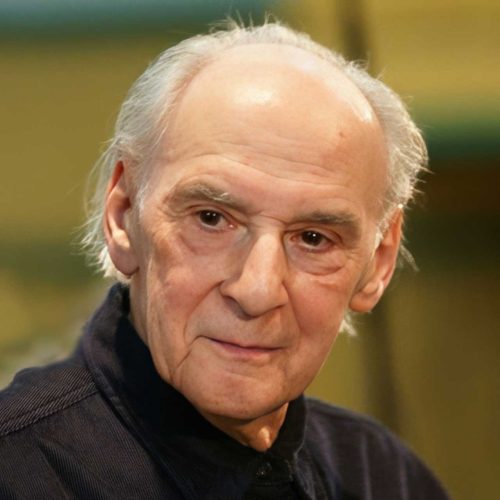
Patrick Harding-Irmer
Here is Patrick Harding-Irmer proving that it is never too late to start dancing! He says, in this interview with Patricia Linton, founder and director of Voices of British Ballet, he only began to take dance classes at the age of 24 but was soon working in dance commercially. In 1972, inspired by a visit to Australia by Nederlands Dans Theater, he came to Europe, where he fell under the spell of the Martha Graham technique and the teaching of Robert Cohan at London Contemporary Dance Theatre (LCDT). After nine months performing with the X Group, he joined the main LCDT, going on the be voted Best Contemporary Dancer in Europe in 1985. This interview was recorded in Sydney, Australia, in 2006 and is introduced by Kenneth Olumuyiwa Tharp.
First published: December 16, 2025
Biography
Patrick Harding-Irmer was born in Munich in 1945, where his Australian mother had been working in dance and choreography. After World War Two, she and he returned to Australia. In 1964 he represented Australia in the World Surfing Championships, and then began to study arts at Sydney University. At the age of 24 he began to take dance classes and to dance commercially. In 1972, inspired by a performance by Nederlands Dans Theater on tour in Australia, he travelled to Europe and began studying at London Contemporary Dance School, specialising in Martha Graham technique. That same year he joined the X Group of the London Contemporary Dance Theatre (LCDT), which included five dancers who toured the UK and abroad, demonstrating and teaching Graham technique. In 1973, after nine months with the X Group, Harding-Irmer joined the main company of LCDT. In 1985 he was voted Best Contemporary Dancer in Europe. He returned to Australia in 1990, and has subsequently taught, and also worked with Australian Dance Artists, a group of mature performers dancing their own creations in different settings.
Transcript
in conversation with Patricia Linton
Patrick Harding-Irmer: Somehow, dance reared its head, and that was… that was wonderful for me, because all of a sudden, I could channel this physical ability that I had and be expressive with it as well.
Patricia Linton: So, when did you start dancing?
Patrick Harding-Irmer: I started dancing when I was 24. I had been doing a lot of discoing and partying, and…
Patricia Linton: So, you knew you could move?
Patrick Harding-Irmer: Oh, I could move, and I knew that people watched me, you know. I definitely knew that I was really good at it, and I knew people watched me. And then one… one girlfriend I had at the time said, “You know, you’re such a good dancer. Why don’t you go and do classes? You know, do some jazz classes or something.” I still didn’t, but then one day I was, um, at the Uni and I was going to play squash with a friend of mine at lunchtime, and for some reason, the court had been double booked, and we didn’t get a game, but in the gymnasium next door, a dance class was going on, and it was a primitive class. So, there was African drumbeats and people doing all these “juga juga waga waga” things, and it was just phenomenal. And I sat there transfixed and watched this class, and, er, at the end of the class, I went down and talked to the guy who was teaching the class, and said, “You know, what’s this? What’s going on? What’s all this about and where can I do it?” His name’s Keith Bain. He was just the… the most wonderful inspiration for me, um, his studio happened to be across the road from the University, so after, after lectures I would occasionally pop across the road and do this primitive dance class with him.
He was with the Bodenwieser Dance Company, after Madam Bodenwieser died, he and, uh, another dancer from the Bodenwieser Company called Margaret Chapple started up this Bodenwieser Dance Centre, which was just over the road from Sydney University.
Patricia Linton: Is that a form of contemporary, or free experimental?
Patrick Harding-Irmer: Yeah, it was, um, central European expressionist dance.
Patricia Linton: Yes, yes.
Patrick Harding-Irmer: But not only were they doing that, which I actually didn’t do any of, but he was doing primitive dance, and their other teachers teaching jazz. So, I did primitive and jazz. I didn’t do any ballet, and…
Patricia Linton: Was that happening there, as well?
Patrick Harding-Irmer: There was ballet, but I wasn’t interested.
Patricia Linton: Right. So, they had a very broad range?
Patrick Harding-Irmer: Yeah, I’d seen a little bit of ballet, and I wasn’t interested in it.
Patricia Linton: Didn’t touch you at all?
Patrick Harding-Irmer: Not at all.
Patricia Linton: Whereas this primitive…
Patrick Harding-Irmer: This primitive did, and, um, what happened to… to actually get me going, after I started to do more and more classes, and I really thought, “Oh, this is fantastic,” and I eventually the Nederlands Dans Theater came to Sydney in 1972 and they came out with works by Hans van Manen, Louis Falco, Charles Czarny, a number of other choreographers, and they did… in Sydney, they played for four weeks, and they did, a number of works by Glen Tetley. And, in fact, one particular work by Tetley and van Manen together called Mutations, which is how they virtually sold the… the Nederlands Dans Theater here in Sydney, because they had this wonderful poster of two naked dancers. They were rehearsing in the studios where we were working. We, as a group of students went and saw every, um, every week. We went, you know, to every…
Patricia Linton: To the rehearsals…
Patrick Harding-Irmer: To the performances, but, also, we peeked in watching them rehearsing things that they were going to be doing elsewhere, and so forth. Yeah, and I… and I met Jaap Flier, and I said, “I’m just so excited by the work that’s going on, and I… you know, I… desperate, I’d love to do this sort of work, and work, you know, be with you,” and I said, “I’m coming over to… to Europe, to, you know, what do I have to do? Can I come and see you? Can I come and audition, or something?” Well, he said, “Yeah, before you come over, do lots of ballet classes, and then come and see me in The Hague.” I did a ballet class, with a… with a wonderful lady who has passed now, unfortunately, called Mary Duchesne, and, um, I did one ballet class, and…
Patricia Linton: Why do you think he said that?
Patrick Harding-Irmer: Because they’re a classical company. They were and still are a classical company doing contemporary works, you know. So, ah, that’s what I did. I… I packed up in ’72 and…
Patricia Linton: With your one ballet class under your belt.
Patrick Harding-Irmer: With my one ballet class under my belt, and I said to my mum, “I’m going away for a year to get some experience,” because I’d… there were a couple of little, sort of, contemporary things happening in Australia. There was the Australian Dance Theatre in Adelaide, and there was what became Sydney Dance Company, at that time was called Dance Company New South Wales. That was just starting to happen, and I thought, “Ah, you know, I’ll go over there, get a bit of experience, come back and hopefully join one of these companies.”
Patricia Linton: So, all this having watched the Nederlands Dans Theater was a… a life change for you? You… yeah.
Patrick Harding-Irmer: Pretty much so. I knew for sure that I needed to be a professional dancer. I knew that already, um…
Patricia Linton: And you were about 25 at this point?
Patrick Harding-Irmer: Yeah, well, when I went away, I was 28 when I went away, so I’d done a few years, and I’d done… I’d done… danced on cruises around the islands doing very commercial type of work. I performed in a few clubs, and a few television productions, things like that. So, I had already tasted performing.
And so, er, I went, um, I went to The Hague, and I saw Jaap Flier there, and it was very nice, but I wasn’t particularly interested, because I’d heard of London… London and things happening there, you know. And because I didn’t have enough ballet – one ballet class wasn’t going to get me in, in the realms of the… dancing alongside all of these other classically trained dancers. Anyway, I arrived in… arrived in London, and I enrolled at The Place in… ten evening classes in the [Martha] Graham technique, and the class that I attended first was taught by a woman called Irene Dilks. She had been in London Contemporary Dance Theatre. She said after, after the class, to me, “Oh, I hope you’re coming back tomorrow, because I’d like somebody to have a look at you.”
And I was coming back tomorrow, because I’d paid for ten classes, so I was there the next day, and, um, somebody was looking at me, and that was a woman called Flora Cushman, who was the director of the X Group at the London Contemporary Dance School, and the X Group was a small company of five dancers, who were going out into the provinces teaching, showing lecture demonstrations of the Graham technique, and performing small, er, dances choreographed for duets, or the five dancers in the company.
Patricia Linton: So, this was an offshoot of the company, not the school?
Patrick Harding-Irmer: That’s right, an offshoot of London Contemporary Dance Theatre.
Patricia Linton: About how long had all that been established by this time?
Patrick Harding-Irmer: That had been going for two years, I think, before I came. Yeah, so I arrived in ’72, and yeah, it had probably been going ’70, ’71, I think. And the company, London Contemporary Dance Theatre itself had only been going since ’69, or whatever. Started ’67 with the germs of it, and then ’69 they started to become a…
Patricia Linton: And this was all a result, really, of…
Patrick Harding-Irmer: Robert Cohan, Robin Howard.
Patricia Linton: Robin Howard getting involved with Martha Graham, wasn’t it?
Patrick Harding-Irmer: Yes. Yeah, when the Graham… yeah, when the Graham company had come to London.
Patricia Linton: Even as far back as the ‘50s, and…
Patrick Harding-Irmer: That’s right.
Patricia Linton: He’d kept… kept…
Patrick Harding-Irmer: Robin Howard was incredibly inspired by her work, and desperately wanted, er, England to have this technique, and so he actually persuaded Robert Cohan – who at the time was a partner of Graham’s, and, in fact, um, associate director of the Graham Company – to come to London to start a school, and hopefully a company then.
Yeah, so anyway, speaking of Robert Cohan, um, this Flora Cushman said, “Oh, come back tomorrow because I’d like someone else to have a look at you”.
Patricia Linton: This is your third day?
Patrick Harding-Irmer: And then third class, third day, and then Robert Cohan was down there in the evening school – unheard of – in the evening school with a pair of silver platform boots on, and, ah, yellow sunglasses, hair down to… down to his middle back, a green leather jacket on, and I thought, “Wow. What’s that?”
I was, you know, I was in London. And, er, you know, Bob thought I was OK and said “yes”, and, um, I was taken straightaway into the X Group. Got my money back for seven lessons. Straightaway into the X Group, who were just about to go out on tour of around somewhere in England, I can’t remember where it was, and I learnt the… the demonstration, the Graham lecture demonstration in, you know, four or five days. Learnt a couple of pieces that we were performing, and out I went.
And I went nine months through with the X Group, touring all around, doing all sorts of works from really interesting choreographers working on us. Carolyn Carlson, um, other people from the… from the main company. Flora Cushman did a lot of works. We performed in theatres. And, um, and also in… in gymnasia and things like that.
And, um, we indeed had some overseas tours. We went to Ireland, we went to Holland, and at the end of my time with them, we had this wonderful season in Holland Park, in the outdoor theatre at Holland Park, and that was just great. And, um, it was in that small company that I met my wife, Anca [Frankenhaeuser], and she and I, and one other dancer, Cathy Lewis, from the X Group were asked to join the main company in, er, July of 1973.
Yeah, and, um, yeah, it was fantastic. There were six boys in London Contemporary Dance Theatre at the time. One English boy, that’s all. There was, um, Robert North from the States, there was Namron from Jamaica. There was Ross McKim from Canada. There was Micha Bergese from Germany. There was me from Australia, and there was Anthony Van Laast from England. He was the only English boy in the company.
Patricia Linton: Why was that? Because contemporary had only just started to…
Patrick Harding-Irmer: That’s right. There weren’t any English boys.
Patricia Linton: No, no.
Patrick Harding-Irmer: They were doing… they were doing a bit of contemporary in the Rambert company, I believe. They had some Graham classes and things in Rambert.
Patricia Linton: Yes, because they’d just changed, yes?
Patrick Harding-Irmer: And the Rambert was just changing, yeah. Just changing over whenever it was, late ‘60s or something they were changing over.
Patricia Linton: So, London Contemporary Dance was very much based on the Graham technique?
Patrick Harding-Irmer: Totally.
Patricia Linton: Exclusively?
Patrick Harding-Irmer: Exclusively. We had a couple of Graham works at the time. We had, ah, the beautiful Diversion of Angels, and, um, El Penitente, which was another beautiful work of Graham’s, and there was, ah, there was… Robert North had been with the Graham company for a little while, and also one of the… one of the female dancers in the company, Noemi Lapzeson, had also been a dancer with the Graham company. They had, kind of, been brought over to bolster up in London.
The way Cohan taught the Graham technique was particularly suited to us. We were not in the States, Americans doing American works, but we were now English, in a funny sort of mishmash, doing works by Cohan and a few others, um, mostly choreographers within the company. So, Siobhan Davies was starting her choreographic, um…
Patricia Linton: Career.
Patrick Harding-Irmer: Absolutely, yes. Robert North was doing his stuff. Er, Micha was also choreographing, and, in fact, throughout the time that we were in London Contemporary Dance, everyone was encouraged to choreograph.
Patricia Linton: And many of them are still doing it.
Patrick Harding-Irmer: Indeed, yeah, to great, you know, great acclaim.
The transcript of this podcast may have been lightly edited for ease of reading.
You may also like...
Jean Bedells
Kevin Richmond