The dance writer, and former dancer, Deborah Weiss is joined in the studio for a special Voices of British Ballet round table discussion. Anita Landa, Pamela Hart, Joyce Lyndon and David Long, are...

people » Irina Baronova
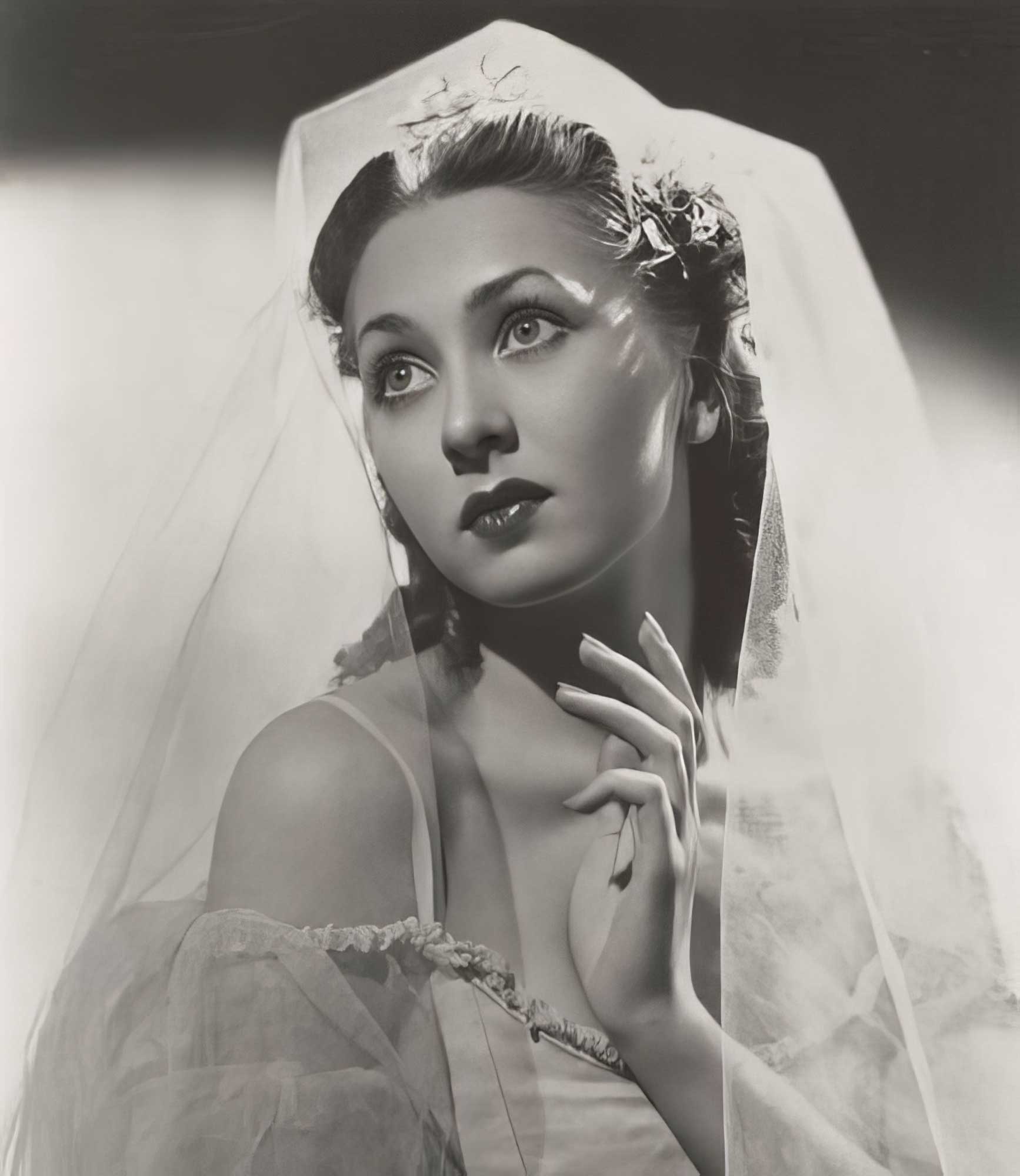
Irina Baronova was a Russian-born ballerina and actress, known as one of the “Baby ballerinas” of the Ballet Russe de Monte Carlo. She was born in Petrograd in 1919. Her father, Mikhail Baronov, was a lieutenant in the Imperial Navy, and in 1920 he and his family had to flee the country following the Russian Revolution. They crossed the border into Romania disguised as peasants and eventually settled in Bucharest. They had no money in a foreign country where they did not know or speak the language. Baronov eventually found a job at a factory, and the family spent the following years living in the city slums.
At the age of seven, Baronova began taking her first ballet classes when her mother (who was a ballet enthusiast) found her a teacher, Madame Majaiska, a former corps de ballet member of the Imperial Russian Ballet. She was also a refugee from Russia and so conducted Baronova’s classes in the kitchen of her one-bedroom house, using the kitchen table as a barre. To provide Irina with professional training, the family moved to Paris when she was ten years old, where she was taught by Olga Preobrajenska and Mathilde Kschessinska. In 1930, at the age of 11, Baronova made her debut at the Paris Opéra. The catalyst for her career came in 1932, just before her 13th birthday, when George Balanchine engaged her for the Ballet Russe de Monte Carlo, along with the equally youthful Tamara Toumanova and Tatiana Riabouchinska. The English critic Arnold Haskell dubbed this illustrious trio the “Baby Ballerinas”.
Baronova was 14 when she was given her first principal role, as Odette in Act II of Swan Lake, in which she was partnered by Anton Dolin. At the age of 17, she eloped with an older Russian man, German (Jerry) Sevastianov, in order to get married. Their marriage came two years later, in 1938, with a ceremony in Sydney, Australia. Baronova then joined Ballet Theatre (now American Ballet Theatre) in the United States of America, subsequently divorcing Sevastianov. In 1946, in the United Kingdon, she met the theatrical agent Cecil Tennant who asked her to marry him, which she did, retiring from her career in ballet at the age of 27.
Between 1940 and 1951, Baronova appeared in several films, including Ealing Studio’s Train of Events (1949). Much later she worked as ballet mistress on the 1980 Hollywood film Nijinsky. During her marriage to Tennant, she gave birth to three children: Victoria, Irina and Robert. In 1967, Tennant was killed in a car accident, and Baronova subsequently moved to Switzerland. She then resumed her marriage with her first husband, Sevastianov, who died in 1974. Baronova then began teaching master classes in the UK and the USA. In 1986 she staged Mikhail Fokine’s Les Sylphides for The Australian Ballet, and in 1992 returned to Russia to help the Maryinsky Theatre with an archival project. In 1996 she received a Vaslav Nijinsky Medal in Poland and an honorary doctorate from the North Carolina School of the Arts. In 2000, she went to live in Australia with her daughter, Irina. In 2005 she appeared in a documentary on the Ballet Russe, and published her autobiography Irina: Ballet, Life and Love. She died in her sleep in Byron Bay, Australia, on June 28, 2008, at the age of 89.
Podcast » Dianne Richards
Here is Dianne Richards, skipping through parts of her dancing life – in this case at the start of London Festival (now English National) Ballet. Names from the world of Serge Diaghilev and his...
Podcast » Rowena Jackson and Philip Chatfield
This gorgeous couple, infectiously happy and loving and warm, not surprisingly became special “voices” for British ballet. They were stars of The Royal Ballet at a remarkable point of that...
Timeline Event » 1933 – First London season by the Ballet Russe de Monte Carlo at the Alhambra Theatre
With the death of Serge Diaghilev in 1929 the powerhouse of the Ballets Russes company he had created died with him. Creative life and the young never stand still for long, and from both necessity...